29 December 2009

day month year or year month day, but not month day year... time for ISO 8601

Most countries on planet earth use the system, day month year (dd mm yyyy) to reference a calendar date.

A minority use month day, year (mm dd, yyy) - Belize, Canada (occasionally, but conforms to the majority), Federated States of Micronesia, Palau, Philippines and the United States of America.

While most of the world understands the American system in context, there is still a lot of confusion, particularly for travellers. From the International Organization for Standardization (ISO)
How can one avoid confusion when a date like 08/04/02 has at least six different interpretations around the world? A notation like 01/02/03 could mean 1 February 2003 or 2 January 2003 or 2 March 2001. Usually by deduction one can sort it out. Usually - but sometimes, huge and costly confusions can arise. The problem is that all-numeric dates are not unambiguous and depend very much on local custom. That's usually OK within a country or region even if there are local inconsistencies between firms and administrations; but outside…?

A simple nicety, you might say. Does this all matter? Well, it certainly does if you "misinterpreted" what was on that ticket. And if you multiply this type of unfortunate occurrence by millions,in business contexts as well as at the individual level, you can see that the compounded problem is something quite frightening - well after the "Y2K bug" scare has receded. Perhaps not in a daily life, when you write to Cousin Bill in Atlanta, or Auntie Jenny in Australia where the systems of writing dates may be different. But think of the number of times that dates and times crop up in business dealings of all sorts, from insurance forms to travel agencies, from banks to tax forms. And there, huge stakes hang on dates, that can make the difference between winning a fortune… or losing it. Goods being traded internationally are relying on the right dates at each and every step - and wrong dates often mean wrong deliveries or no deliveries at all! And dates have caused many problems to computer programmers.

On the Internet, all kinds of notations are used, some language-dependent, and are they all correctly understood on the other side of the globe? Not so sure. Firms and administrations make use of dates in most of their daily operations in one form or another and in most documents used in international trade… and to have a universally compatible form of representation for them makes pure good sense.

So then: wouldn't it be wonderful if there were an internationally agreed standard?
Of course there is. ISO came up with one. ISO 8601, Data elements and interchange formats – Information interchange – Representation of dates and times. It is 33 pages long and will cost you CHF 130. In summary

ISO 8601 advises numeric representation of dates and times on an internationally agreed basis. It represents elements from the largest to the smallest element: year-month-day:

  • Calendar date is the most common date representation. It is:

YYYY-MM-DD

where YYYY is the year in the Gregorian calendar, MM is the month of the year between 01 (January) and 12 (December), and DD is the day of the month between 01 and 31.

Example: 2003-04-01 represents the first day of April in 2003.

  • Week date is an alternative date representation used in many commercial and industrial applications. It is:

YYYY-Www-D

where YYYY is the Year in the Gregorian calendar, ww is the week of the year between 01 (the first week) and 52 or 53 (the last week), and D is the day in the week between 1 (Monday) and 7 (Sunday).

Example: 2003-W14-2 represents the second day of the fourteenth week of 2003.

  • Time of the day is the time representation, using the 24-hour timekeeping system. It is:

hh:mm:ss

where hh is the number of complete hours that have passed since midnight, mm is the number of complete minutes since the start of the hour, and ss is the number of complete seconds since the start of the minute.

Example: 23:59:59 represents the time one second before midnight.

  • Date and time represents a specified time of a specified day. When use is made of the calendar date the representation is:

YYYY-MM-DDThh:mm:ss

where the capital letter T is used to separate the date and time components. Thus, for a very precise date and time, look at this:

Example: 2003-04-01T13:01:02 represents one minute and two seconds after one o'clock in the afternoon of 2003-04-01
After the Y2K mess, the world should have adopted a uniform standard, in much the same way that the prime meridian (latitude/longitude) and Greenwich Mean Time were adopted 125 years ago.

In any case, where possible to avoid confusion, spell out the month.

29/12/2009
29 Dec 2009
2009/12/29
2009 Dec 29

27 December 2009

Fly, Colton, Fly

A juvenile fugitive in northwest United States has attracted worldwide attention.

From MSNBC (7 October 2009)


Excerpt from AFP (and picked up by Australia's ABC)
SEATTLE, Washington — Eighteen-year-old Colton Harris-Moore is achieving folk hero status as the "Barefoot Bandit" in the US and Canada after a string of burglaries and dare-devil escapes from the law.

Romanticized by some as a latter-day "Billy the Kid" figure but regarded by others as a common thief, Harris Moore has a criminal record stretching back to when he was just 12 and a penchant for kicking off his shoes before fleeing.

Caught in 2007 and sentenced to detention in a halfway house near Seattle, the teenager from Camano Island, north of Seattle, escaped the following year and his legend began to grow.

Shortly after breaking out, he was being pursued driving a stolen Mercedes-Benz near his mother?s home when he jumped from the moving vehicle and ran into the woods, leaving police with a wrecked car filled with loot.

Among stolen possessions recovered was a digital camera the fugitive used to take a self-portrait. The photograph, complete with self-assured smirk, has become the public face of a teenage robber who has now become an Internet idol.

read more


This morning, when I checked the facebook fan club, there were around 10 000 members, tonight some 12 hours later, it has grown by another 4000.

See also
- Time magazine (America's Most Wanted Teenage Bandit, 21 December 2009)
- Everett Herald
- Seattle Weekly
- Seattle Post-Intelligencer

Of course, a character like Colton would most likely be embraced in Australia, where historically, our folk heroes have been bushrangers like Ned Kelly, Ben Hall and Captain Moonlight who were romanticised in an anti-authoritarian manner.

Colton is no hero, but one can't resist admiring him for his skills of survival and elusion.

Such a naughty boy. Santa probably left him a lump of coal.

26 December 2009

Milton Keynes

Recently, BBC News published a feature about Milton Keynes given England's bid for the 2018 World Cup (FIFA) and that MK could be a host 'city'.

Manchester, Liverpool, Newcastle and Nottingham. These are cities with football passion and pedigree coursing through their streets.

And Milton Keynes? This new town in Buckinghamshire finds itself sitting in exalted company on the list of 11 host cities for World Cup 2018.

Over the years, it's been the butt of jokes about concrete cows, and contrasts have been unkindly drawn between the town and yoghurt - only one of which has culture, say sneering comics.

But if this bid is successful, then the last laugh could be had by Milton Keynes and its fast-growing populace, because it would suddenly find itself on the sporting tourist trail.

The feature then lists 10 highlights of the town. I have probably visited the place ten times, well often enough to know how to walk from the railway station to the main shopping centre, and the only memorable attributes of the town are actually the concrete cows and the giant, yet named, roundabouts.


(photo from Wikipedia) the railway station is somewhere around here


(photo from Wikipedia) Liz Leyh's concrete cows

24 December 2009

How to survive a zombie 'outbreak'

I have previously written about zombies. What I have not considered (until now) is how to survive a zombie 'outbreak'.

Jake Halpern, a teacher at Yale and regular contributor at NPR, recently spoke about scenarios and how to survive.
For example: What would you do if the city of Boston were overrun with flesh-eating zombies, and you have to get to the last outpost of human civilization, which is nestled in the mountains in Winter Park, Colo.? Of course, first things first, you go to the gun store and pick up a heavy machine gun. Then you commandeer a car, preferably a Toyota Prius. Think about it — you really want to stop for gas?
...
For example, when fleeing zombies, [Max] Brooks advises against using a sedan. Instead, he suggests using an armored car. Even if you break down or run out of gas, you're still sitting pretty in a nice little fortress.
...
Brooks also scoffs at my notion of using a heavy machine gun, pointing out — quite rightly — that zombies can only be killed with a perfect head shot. I'd always imagined myself aiming my gun at head level, and then mowing down an entire crowd of the undead with one fluid spray of bullets. Not so easy, says Brooks, because zombies — like the humans they used to be — are not all the same height.
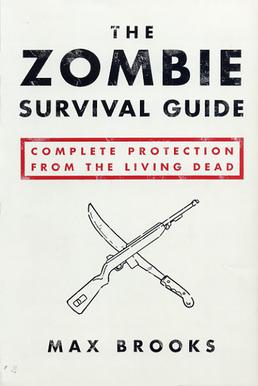
We should all think about our escape and survival plans and read Max Brooks' book, The Zombie Survival Guide.

23 December 2009

Banksy's sinking feeling

I've previously written about a number of Banksy works being destroyed.

Londonist has reported four new Banksy works in Camden (north London).

One in particular, located next to Regent's Canal, appears to be a statement to climate change skeptics, or those who are stonewalling political action.


(photo by Luke MacGregor, Reuters via ABC)

22 December 2009

official languages of the United Nations

The United Nations (UN) uses six official languages. From UN Department of General Assembly and Conference Management on official languages

An international organization must have effective ways to overcome language barriers to avoid becoming a Tower of Babel. Since almost every country in the world is represented at the United Nations, it is not an exaggeration to say that the United Nation is a microcosm of the world. The Organization uses six official languages in its intergovernmental meetings and documents, Arabic, Chinese, English, French, Russian and Spanish; the Secretariat uses two working languages, English and French.

Statements made in an official language at a formal meeting are interpreted simultaneously into the other official languages of the body concerned by United Nations interpreters. If a delegation wishes to speak in a language that is not an official language, it must supply an interpreter to interpret the statement or translate it into one of the official languages. It is then rendered into the other languages by a relay system.

Documents are produced in the six official languages and are issued simultaneously when all the language versions are available.

(last paragraph in Arabic, Chinese, French, Russian and Spanish)

ويتم إنتاج الوثائق باللغات الرسمية الست وهي تصدر معا عندما تتوافر بهذه اللغات جميعا.

文件用六种正式语文印制,在所有语文版本备齐后同时分发。

Les documents sont produits dans les six langues officielles et publiés une fois que toutes les versions linguistiques sont disponibles.

Работая нередко «за кулисами», сотрудники ДГАКУ вносят негромкий, но существенный вклад в работу Организации Объединенных Наций.

El personal del Departamento, que suele desempeñar su tarea de manera discreta entre bastidores, realiza una aportación fundamental para la labor de las Naciones Unidas.

The BBC has reported that the Bangladeshi government and the West Bengal assembly of India are seeking to have Bengali made an official language of the UN.

How many people in Bangladesh and parts of India would be interested in reading UN documents, apart from government? In any case, even the governments of Bangladesh and the state of West Bengal use English themselves, so they may be missing the point.

The number of total speakers seems like a logical argument, but when that language is restricted to very few countries or parts of countries, then it wouldn't be efficient to translate every UN document into yet another language when only five per cent of documents would be of any used, particularly when those governments already function in English.

Hindi, more widely spoken, is not an official language. Portuguese, spoken in more countries, is not an official language.

In any case, nobody has missed out on the action so far, so the push to add Bengali is more aiming for recognition and pride, than anything bureaucratically necessary.

20 December 2009

a bridge to stretch the imagination

Currently, the only way to travel between Hong Kong and Macau is by ferry (high speed hydrofoil), which takes about an hour (by Turbojet or Costai). To go via land, particularly for transporting heavy goods, means travelling via the mainland, taking the long way around.


Construction of a bridge between Hong Kong and Macau (and Zuhai) will commence at the end of this year, which will be one of the largest engineering feats devised. According to the HKSAR Highways Department,
The proposed Hong Kong – Zhuhai – Macao Bridge (HZMB), being situated at the waters of Lingdingyang of Pearl River Estuary, is a large sea crossing linking the Hong Kong Special Administrative Region (HKSAR), Zhuhai City of Guangdong Province and Macao Special Administrative Region. The functions of the bridge are to meet the demand of passenger and freight land transport among Hong Kong, the Mainland (particularly the region of Pearl River West) and Macao, to establish a new land transport link between the east and west coasts of the Pearl River, and to enhance the economic and sustainable development in the three places.
and
The HZMB Main Bridge is a 29.6km dual 3-lane carriageway in the form of bridge-cum-tunnel structure comprising an immersed tunnel of about 6.7 km. According to the current option, It runs from the artificial island off Gongbei of Zhuhai to the eastern artificial island for the tunnel section just west of the HKSAR boundary.

The project includes:

  • construction of a 29.6 km dual three-lane carriageway in the form of bridge-cum-tunnel structure comprising a tunnel of about 6.7 km;
  • construction of two artificial islands for the tunnel landings west of the HKSAR boundary; and
  • associated works including civil and structural works, environmental mitigation, drainage, electrical and mechanical, traffic control and surveillance system, etc.


The bridge is designed with a service life of 120 years. It will be built to withstand the impact of strong winds up to a speed of with a speed of 16 on the Beaufort scale (184 to 201km/h), a magnitude-8 earthquake and a 300,000-tonne vessel.

When completed, it will be the longest sea bridge in the world.


See
- The Guardian
- Arup, one of the partners building the bridge
- New Civil Engineer (UK)

18 December 2009

It's better to walk with a dog

The benefits of regular exercise such as walking are well known. Even better is including a dog. From University of Missouri news release (of 28 September 2009), edited
A Pet in Your Life Keeps the Doctor Away

Sept. 28, 2009

Story Contact(s):
Kelsey Jackson, JacksonKN@missouri.edu, (573) 882-8353

COLUMBIA, Mo. – Lowers blood pressure, encourages exercise, improves psychological health— these may sound like the effects of a miracle drug, but they are actually among the benefits of owning a four-legged, furry pet.

“Research in this field is providing new evidence on the positive impact pets have in our lives,” said Rebecca Johnson, associate professor in the MU Sinclair School of Nursing, the College of Veterinary Medicine and director of ReCHAI.

“Pets are of great importance to people, especially during hard economic times,” Johnson said. “Pets provide unconditional love and acceptance and may be part of answers to societal problems, such as inactivity and obesity.”

ReCHAI sponsors several projects that attempt to further the understanding and value of the relationship between humans and animals. In 2008, ReCHAI sponsored the “Walk a Hound, Lose a Pound and Stay Fit for Seniors.” In the preliminary program, a group of older adults were matched with shelter dogs, while another group of older adults were partnered with a human walk buddy. For 12 weeks, participants were encouraged to walk on an outdoor trail for one hour, five times a week. At the end of the program, researchers measured how much the older adults’ activity levels improved.

“The older people who walked their dogs improved their walking capabilities by 28 percent,” Johnson said. “They had more confidence walking on the trail, and they increased their speed. The older people who walked with humans only had a 4 percent increase in their walking capabilities. The human walking buddies tended to discourage each other and used excuses such as the weather being too hot.”

“Today, pets are in more than 60 percent of American homes,” said Charlotte McKenney, assistant director of ReCHAI. “Research involving human-animal interaction can be extremely beneficial. More people are incorporating pets into their leisure time, such as making them part of their exercise routines, taking them to dog parks and bringing them to family events.”
See also New York Times.

I can attest to this. I considered walking with a dog as exercise, whereas walking alone was just a means of getting from one place to another.

I miss walking Kane the German Shepherd. He died on Monday and I miss him (see his blog). He was a wonderful walking companion when he was still fit.

16 December 2009

Octopus tools

Early last year, I wrote about Louis the Octopus who was attached to his toy Mr Potato Head.

Museum Victoria, based in Melbourne, has researched and reported about the Veined Octopus using tools. From MV news
Tool use in Veined Octopus
15 December, 2009

Click here to view larger image.
Veined Octopus in coconut shell shelter
Image: Roger Steene
Source: Courtesy of Current Biology

Museum Victoria’s Julian Finn and Mark Norman have recorded the first case of tool use – sophisticated behaviour generally limited to mammals and birds – in an invertebrate.

The Veined Octopus, Amphioctopus marginatus, uses foreign objects for shelter, which is common in octopuses and is not itself considered tool use. However the Veined Octopus goes a step further and prepares, manipulates and carries coconut shells up to 20 metres to reassemble its shelter elsewhere.

Julian and Mark spent more than 500 hours diving in Indonesian waters to observe and film these animals. They watched octopuses dig out coconut shells from the ocean floor, empty shells with jets of water, stack two empty shells hollow-side up, and carry the shells in a unique gait they call ‘stilt-walking’. This series of actions are among the most complex ever recorded in an octopus.

The Veined Octopus probably evolved this behaviour using clam shells as shelter. However once humans began discarding large numbers of coconut shells, they inadvertently created a steady supply of lightweight octopus tools.


Julian and Mark’s paper ‘Defensive tool use in a coconut-carrying octopus’, was co-authored by Tom Tregenza. It was published in the journal Current Biology on 15 December.
I am hoping that one day, scientists will discover a species of octopus that build houses, exchange some form of money for food, goods or services, and keep crabs as pets. Still, many will continue to end up barbecued.

15 December 2009

selling the goose that lays the golden egg

BBC Worldwide is the commercial arm of the BBC and earns significant revenue for them

BBC Worldwide is the main commercial arm and a wholly owned subsidiary of the British Broadcasting Corporation (BBC). Its mission is to create, acquire, develop and exploit media content and brands around the world in order to maximise the value of the BBC's assets for the benefit of the UK licence payer.

The company has seven core businesses: Channels, Sales & Distribution, Magazines and Children's & Licensing, Content & Production, Home Entertainment, Digital Media and Global Brands.

In 2008/09 BBC Worldwide generated profits of £103 million (before exceptionals) on revenues of £1.004bn.

BBC Worldwide operates under the BBC Charter and Agreement, which sets out four commercial criteria with which our activities must comply. BBC Worldwide's activities must:

  • Fit with the BBC's Public Purposes as set out in the Charter;
  • Be commercially efficient;
  • Not jeopardise the good reputation of the BBC or the value of the BBC brand
  • Comply with the BBC's Fair Trading Guidelines and avoid distorting the market

BBC Worldwide provides a global showcase for the best of British creative talent including actors, journalists, presenters, writers, directors, musicians, designers and technicians. We sell programmes and formats produced by more than 500 different UK independent producers. Through our activities we build the reputation of the BBC globally and in April 2009 we were awarded the Queen's Award for Enterprise which recognised the company's substantial growth in overseas earnings over the past three years.

Over the past five years we have invested more than £1bn in the UK's creative sector, making BBC Worldwide a major supporter of this increasingly important area of 'UK plc'.

The Guardian has reported that the British government is urging the BBC to sell off BBC Worldwide.

Given that BBC Worldwide is dependent on BBC programming to make sales, such a move is completely ludicrous. A privately owned BBC Worldwide, which would probably need to change its name, would then have to buy programming (offshore distributions rights) from the BBC itself, amongst other independent productions, to on-sell to third parties.

Baffling logic.

13 December 2009

public duties - official engagements

The Mail on Sunday has reported that Her Majesty Queen Elizabeth II plans to hand over substantial public duties (official engagements) to her grandson Prince William.

Were these 'public duties' devised to keep a monarch busy? Are they necessary?

Who else would perform these 'public duties' if the United Kingdom became a republic?

In the absence of ruling by divine right, what is the point of a non-elected monarchical head of state that couldn't be performed by another person?

12 December 2009

pink stinks

From BBC News, a discussion about wearing the colour pink.

Men in the pink

Men wearing pink clothes

By Finlo Rohrer
BBC News Magazine

A pressure group wants parents to resist buying pink toys for girls this Christmas. But the colour isn't just controversial for girls - men are only just getting over their fuchsia phobia and for boys pink really does stink.

If you're a typical little boy, pink is viewed as girly, effeminate, unmasculine, and, in short, to be avoided.

And yet, a strange thing seems to happen to the modern British boy when they reach adulthood. Pink no longer seems to be so rigidly associated with female dress.

In many areas of British life, like the City, pink shirts are seen as normal workwear. Pink ties are normal. Even pink socks make an appearance.

Boy in pink shirt
There are men who are comfortable in pink who would not dress their sons in pink

And it's not just in finance. Pink is a classic colour for polo shirts. On everyone from mods in Fred Perry, to those who model their dress on football "casuals", pink is not seen as fundamentally feminine.

The colour is currently popular in both high fashion and the High Street, says Robert Johnston, associate editor of GQ magazine.

"We have all grown up a bit. Pink is a flattering colour. This season there are a lot of pastels for men - a lot of those will be pink. Women like men in pink."

To take one example, 5% of shirts sold by the English shirtmaker Turnbull & Asser, based in London's Jermyn Street, are pink. "It is one of the default choices," says buyer Charles O 'Reilly.

Pink hasn't always been acceptable for men.

"We have come a long way even compared with 20 years ago," says Johnston. "Pink was the last taboo colour-wise."

PINKSTINKS CAMPAIGN
Running for 18 months
Currently targeting Early Learning Centre
Activists argue that while a wide variety of boys' toys are available, those for girls are often predominantly pink

"If you look at places like Jermyn Street and Savile Row you will see pink," says Bronwyn Cosgrave, author of Costume & Fashion: A Complete History. " It is historic."

So the story of pink clothing acceptance isn't as simple as a recent innovation.

"Men, for centuries up to the dawn of the 20th Century, were far more elaborately dressed than women," says Ms Cosgrave. In the era of the dandy - the late 18th Century - pink wasn't that unorthodox for a man.

"There was a great sobering effect with the dawn of the Wall Street and City culture - men have gone to work in the last 100 years in pinstripes and white shirts."

There were exceptions. "Douglas Fairbanks and Cary Grant - immensely important in popularising modes of male dress - wore pink shirts and sweaters," says Ms Cosgrave.

In the 1960s and 1970s the influence of the counterculture on dress also began to loosen things up, she argues.

Quentin Tarantino gazes at Brad Pitt's pinkish suit
Pastel tones are apparently 'in' right now

Colour consultant Angela Wright concurs. "Until about 40 or 50 years ago, men did not show their feminine side at all. They were required to be strong and ultra masculine the whole time, so pink was out.

"There was little doubt in anyone's mind that a man wearing pink was definitely suspect. When the pace of evolving attitudes increased, around the same time as homosexuality between consenting adults was legalised, the strong demarcation lines between the sexes began to blur."

Even the idea that pink is a colour particularly associated with homosexuality doesn't bear out.

"Gay men don't actually appear to feel the need to stress that side of themselves in their dress," says Ms Wright, of consultancy firm Colour Affects. "It is more a case that society does that for them, by, for example, naming their purchasing habits 'The Pink Pound'."

Certain tailors, like Richard James and Ozwald Boateng, are associated with the use of flamboyant colours. And traditionalists have also beat a path.

Woman with pink shirts and blouses
Dress became less conservative in the 1960s and 1970s

"Thomas Pink really did legitimise men flaunting pastel shades such as pink and lavender," says Ms Cosgrave.

After the austerity of the middle years of the 20th Century, fashion has come back to the point where wearing pink would be seen as nothing more than flamboyant, or having certain "preppy" or upper class connotations.

"It has got that Ivy League, slightly public school [connotation], you think of posh boys, sweaters round their shoulders," says Johnston.

"The gender separating of colours of clothing is more or less over."

Perhaps the strangest thing is that the bar against pink for boys persists. The very same men who are happy to wear a pink polo shirt might think twice about dressing a 10-year-old boy the same way.

"I remember when I was a kid little boys would throw away pink felt tips [from a set]."

Golfer in pink shirt and shoes
Pink no longer undermines a man

It has been noted, not least by the sceptic Ben Goldacre while attacking research on the subject, that the pink/blue split was not always as it is today.

He cited the Ladies' Home Journal from 1918 saying: "There has been a great diversity of opinion on the subject, but the generally accepted rule is pink for the boy and blue for the girl. The reason is that pink being a more decided and stronger colour is more suitable for the boy, while blue, which is more delicate and dainty, is prettier for the girl."

So the mystery of why people will not dress boys in pink persists.

Really, pink is a dreadful colour. It has nothing to do with it being a 'girly' colour. It is more to do with pink being a ghastly shade of red.

I would never give anything pink as a gift for a just born a baby girl as it is a ghastly colour. Soft yellow or even blue, perhaps green would be more suitable.

From Windows XP Toshiba to MacBook

One of the cheapest option to replace the Toshiba's blue screen of death was with the Apple MacBook, which have come down considerably in price. Apparently, the protection from viruses, phishing and intrusion attempts are built into the system.

But where are the PgUp and PgDn keys? Or indeed, the backspace key.

06 December 2009

computer errors

My computer is unstable and crashes constantly due to hardware error.

Three years seems to be the lifespan of a notebook.

Time for an upgrade from Windows XP I think.

04 December 2009

Starry Night Over the Rhône comes to town


Vincent van Gogh's painting Starry Night Over the Rhône (1888) is one of 112 works of art from Musée d'Orsay (in Paris) that will be exhibited at the National Gallery of Australia as 'Masterpieces from Paris'.

It is one of my favourites, along with his other Starry Night (exhibited at MoMA, New York). I am also excited about Monet's Lily Pond, Green Harmony (another in the Japanese Bridge series, which is also in town).

03 December 2009

headline of the month

Pilgrims in Ireland have been visiting the Marian Shrine in the village of Knock in County Mayo. The Irish Times reported that on 31 October, about 10 000 people attended a supposed apparition of the Virgin Mary, where people claimed to see the sun shimmering, changing colour and “dancing in the sky”. As a result, there has been a rise in eye damage.

Australia's ABC could not resist an appropriate headline
Irish pilgrims blinded by the light
No other media outlet saw the light.

02 December 2009

Fat gang story busted

Last month, I wrote about the widely reported story of a gang in Peru that allegedly killed people in order to extract their fat, which was then sold to buyers to make cosmetics. I questioned the veracity of story even if the media did not as too many things just didn't add up.

Reuters has now reported that the police in charge of the investigation had misled the public. From BBC News
Peru human fat killings 'a lie'
By Dan Collyns
BBC News, Lima

Peru's police chief has suspended a top investigator for saying he had caught a gang who were murdering people to sell their fat.

Last month, top organised crime investigator Felix Murga said police had arrested four suspects who confessed to murdering up to 60 people.

He said they were selling their fat for thousands of dollars a litre.

But the macabre tale now appears to be nothing more than a tall story - or a big fat lie.

'Sold-on'

In an extraordinary press conference, police showed two bottles of what they said was human fat and a photo of a decapitated head.

Mr Murga told journalists how four suspects had confessed to gruesome murders reviving an Andean legend about the Pishtacos - mythical killers who murdered people on lonely roads to collect their fat.

But two weeks later a complete lack of evidence showed the police account to be more fiction that fact.

As a result Peru's chief of police, Miguel Hidalgo, announced Mr Murga would be put on indefinite leave from his job for sullying the reputation of his unit.

Initial doubts were compounded when police from the region where the crimes were alleged to have taken place said they knew nothing about a gang of murderers killing people for their fat.

They were only able to corroborate one of the dozens of alleged disappearances in a region where drug-trafficking and violence is rife.

Mr Murga and the head of the anti-kidnapping unit had also claimed the fat was sold for thousands of dollars in the European black market supplying the cosmetics industry, but could not confirm any sales.

Medical experts dismissed this theory, saying human fat had no monetary value and injecting it from one person to another would be potentially life-threatening.

Some anthropologists say the police's story deliberately played on an old Peruvian myth to explain crimes which the police had failed to investigate fully.

Other observers say this story was just one of many embellished or invented news stories used as a smokescreen which are intended to distract the general public from the real issues facing Peru.

What a surprise. . Surely media outlets should question the plausibility of a story before releasing it. On the other hand, never believe everything you read in the media, no matter how respectable, including the BBC if it doesn't add up.

01 December 2009

Is it really a cuisine?

The (UK) Daily Telegraph has a picture gallery of "Great British dishes".

I admit to liking several of them, like kippers, black pudding, bangers and mash, cottage pie (but I call it shepherd's pie, with beef mince), fish and chips, and roast beef with yorkshire pudding. None of them, I would eat on a regular basis given they are rather stodgy and unhealthy. Nor would I call any of the dishes great. Honestly.

If the dishes pictured represent British cuisine, then it has got to be one of the worse in the world.


A breakfast fry up with black pudding
(picture by Abbie Trayler-Smith for Daily Telegraph)

I agree somewhat with this Sydney Morning Herald (travel) blog

The best
- Japan
- France
- Thailand
- Italy
- India

The worst
- the Netherlands
- Eastern Europe
- East Africa
- Britain
- United States

30 November 2009

Michelin star meal for nix

Hong Kong's The Standard recently reported about the launch of the second edition of Michelin Guide Hong Kong Macau. Fine dining is actually quite expensive in Hong Kong, so the inclusion of more affordable (actually rather cheap) places is great
Michelin Guide director Jean-Luc Naret said yesterday one can also have a "star" meal for just HK$100.

The two described as the "cheapest" among restaurants rated by Michelin are the one-star Tim Ho Wan, on Kwong Wa Street in Mong Kok, and Hung's Delicacies, on Wharf Road in North Point.

Tim Ho Wan chef Mak Kwai-pui used to work for Lung King Heen, and started his own business in March.

A chef for 30 years, Mak said he was surprised his nine-month-old business had made it to the world's top food guide.

"The shop's decoration is simple and we only have 29 seats here," he said, adding he has no intentions of expanding as he wants to maintain a high quality.

HK$100 is about A$14.15 or US$12.90 and that is the price of several dishes or a complete meal for a person. Dim Sum (uniquely called Yum Cha in Australia) costs more than that in Australia. Also reported in Sydney Morning Herald.

Photos by Chika Watanabe via Flickr (http://www.flickr.com/photos/chikawatanabe/ / CC BY 2.0)


29 November 2009

random footy photo

Brisbane Lions Training Session
Jun 26 2009
BRISBANE, AUSTRALIA - JUNE 26: Simon Black chases down the ball during a Brisbane Lions training session at The Gabba on June 26, 2009 in Brisbane, Australia. (Photo by Bradley Kanaris/Getty Images) © 2009 Getty Images All rights reserved.


I haven't seen the guys since April when I was in Brisbane. Thankfully, they are due to visit in February next year.

wasting food 2

I've previously written about wasting food. According to the New York Times article of 18 May 2008 that I had linked, Americans waste an estimated 27 per cent of food.

A more recent article in the journal of the American Association for the Advancement of Science (AAAS), Science of 25 November 2009, suggested that the wastage figure is even higher at 39 per cent.

The difference between calories available and calories consumed, they say, is food wasted. "We called it the missing mass of American food," says co-author Carson Chow, a mathematician at NIDDK. In 2003, some 3750 calories were available daily per capita; 2300 were consumed, so 1450 were wasted, comprising 39% of the available food supply, the team reports in the November issue of PLoS ONE. This figure exceeds the 27% estimated by the U.S. Department of Agriculture (USDA) from interviews with consumers and producers.

Much of the waste is probably happening at home, say experts. A study published earlier this year by Jeffery Sobal, a sociologist at Cornell University, and colleagues examined food waste in Tompkins County, New York, through interviews. They found that production accounted for 20% of waste, distribution for about another 20%, and consumers for the remaining 60%. "Food waste used to be a cultural sin," Sobal says.

Wasting food should still be considered sinful. We live in a wasteful and 'throw-away' society where it seems acceptable to consume more than we require, whether it is food, water or energy and surplus is wasted.

Surely consuming more calories (kilojoules) than is required is also being wasteful, even if modern production methods have made certain types of food, especially those high in fats and sugar, cheaper.

28 November 2009

the pandas are here

It has been a long wait since the announcement in September 2007, but the pandas have finally arrived in Adelaide. From ABC, 28 November 2009, 5pm
Giant pandas arrive in Adelaide

Adelaide's giant pandas are settling into their new home at the local zoo.

The pandas are in their specially built $8 million enclosure at the Adelaide Zoo, where they will spend the next 30 days in quarantine.

Earlier this morning a crowd of about 100 people greeted them at Adelaide Airport and broke into cheers and even tears when their plane touched down.

Wang Wang and Funi's keepers say the animals coped very well with the 12-hour plus trip from Chengdu in southern China.

The CEO of Adelaide Zoo says it is a relief the city's new giant pandas have landed safely on Australian soil.

Chris West says the pandas will be closely monitored.

"We've got sleeping accommodation in the facility, and I'm quite sure we've got two or three staff who'll be there overnight making sure they're fine," he said.

"We've also got lots of cameras, so we'll be watching them to make sure everything is fine."

The public will get its first chance to see the pandas on December 14.

It is expected the pandas will be released into the outdoor part of their enclosure early in the new year.


See also
- Adelaide Zoo
- The Advertiser (Adelaide newspaper) panda supersite


Wang Wang at his new home (Picture: Bryan Charlton)

I will definitely visit Adelaide to see them, in the next ten years.

Meanwhile in other panda news, San Diego zoo's panda cub was named Yun Zi on 17 November.

There are so few pandas left that anything related to them is a big deal. I suspect that less than one per cent of Australians have ever seen a live panda in person. The last (and only time) that pandas were in Australia was for three months in 1988, when two 'visited' Sydney and Melbourne. Other than that, one would have to visit a zoo, which has them, in another country and even then, there are not that many foreign zoos with pandas. Or panda locations in China.

27 November 2009

World's strongest beer

The world's strongest beer (in terms of alcohol content) is called Tactical Nuclear Penguin, brewed by BrewDog brewery, a 32% double cask matured uber-imperial stout.

The beer also comes with a warning on the label
This is an extremely strong beer; it should be enjoyed in small servings and with an air of aristocratic nonchalance. In exactly the same manner that you would enjoy a fine whisky, a Frank Zappa album or a visit from a friendly yet anxious ghost.


See BBC News. With such a high alcohol content, does it have to be drunk cold?

26 November 2009

Time to sacrifice the Gadhimai festival's animal sacrifices

Reported in the Times of India
Indians throng Nepal's Gadhimai fair for animal sacrifice
Sudeshna Sarkar, TNN 24 November 2009, 06:05pm IST

KATHMANDU: Thousands of Indians from Bihar, Uttar Pradesh and other states bordering Nepal swarmed to the Himalayan republic’s southern plains Tuesday to attend a notorious Hindu fair there and sacrifice animals and birds in the hope their wishes would be fulfilled.

While a debate began to grow in Nepal about the Gadhimai Fair in Bara district and the wanton cruelty it inflicted on animals, the festival drew its strength from zealous Indian attendees who have been flocking to it every five years in a bid to circumvent the ban imposed on animal sacrifices in their own states.

The name on everyone’s lips on Tuesday, when the slaughter of buffaloes started, was that of Raman Thakur, a farmer from Sitamarhi in Bihar who sacrificed 105 buffaloes to show his gratitude. The goddess, Thakur said, had answered the prayer he had made five years ago by granting him a son.

Men, women and children poured in from Bihar, most of them carrying kid goats and roosters, many of which had been smuggled across the porous Indo-Nepal border, bypassing the few Nepali quarantine posts. “My son Vishnu has been ill for years and can’t walk,” said Kalaiya Devi, pointing to a severely malnourished child in her arms whose legs looked like matchsticks. “I am going to sacrifice a pigeon now and come back with a buffalo at the next fair if the goddess gives him the strength to walk.”

People who believe in witchcraft and supernatural powers and were hardened to suffering due to the suffering they themselves have undergone for generations are the people who keep the Gadhimai Fair in Nepal alive while the locals regard it more as an occasion to do brisk business when their hotels and restaurants remain full.

Ram Mahato, 37, who also came from Sitamarhi, planned to watch the execution of the animals, visit the circus and drink his fill of local liquor that has also been doing brisk sale underground despite an official ban on it. He had not heard of Maneka Gandhi, let alone her plea to the Nepal government to ban the quinquennial slaughter at Gadhimai. Neither had he heard that six people, including one from Motihari, had died after consuming adulterated hooch.

“Gandhi?” he asked, scratching his head. “Is she related to Indira Gandhi? But then, they have everything, unlike us. They can afford not to seek the blessings of the goddess.”

The local Maoist MP, Shiv Chandra Kushwaha, said he had decided to skip attending parliament – which his party had agreed to allow to convene for three critical days to pass the budget – to attend the fair since it was for a bigger cause. “About 75 percent of the people who come to fair to offer sacrifices are Indians. We can’t stop them because it is a religious sentiment. Why blame us? It is not us who are making the sacrifices.”

The Maoist MP estimates about 15,000 buffaloes will be killed Tuesday. On Wednesday, he says, the number of slaughtered goats, roosters and pigeons will run into hundreds of thousands. The temple authorities have built a new slaughter house at a cost of nearly NRS 5 million while a huge pit has been dug to bury the heads of the butchered animals. The animal skins are being bought by tannery owners in India and Nepal.

Nepal’s government refused to ban the massacre despite warnings by animal lovers and livestock experts that it could cause an outbreak of animal-borne diseases like goat plague, swine flu and bird flu.

Though celebrities like Maneka Gandhi and yesteryear’s sex symbol French actress Brigitte Bardot raised their voices against the killings, the root of the problem perhaps is that these voices are not as potent in the drinking water and electricity-less villages of Bihar and Uttar Pradesh as the voices of imagined gods and demons.
Vision from Associated Press


The reporting from an Indian newspaper is even more remarkable, as it reports that attendees are mostly Indians from neighbouring states but more importantly, indicates that such ritual sacrifice is itself banned in those neighbouring Indian states.

Just because a cultural practice is old, it does not make it right. There is something macabre about turning mass killing into a spectacle, no matter how old the tradition.

Meanwhile, the President of the United States of America has yet again pardoned another turkey (or two) from being slaughtered for Thanksgiving, even if the 'nominated' turkeys were named, pampered and raised to perform for the televised spectacle. Surely the whole ritual is rather pointless when another nameless turkey is going to be killed and eaten anyway.

25 November 2009

Tintin update

Reported in (UK) The Guardian
Tintin's 3D adventures to land in 2011

Steven Spielberg's 3D adaptation of Tintin will take two years in post-production before it hits cinema screens, says producer Peter Jackson

Tintin
Russell Tovey as Tintin in the Barbican's stage version of the classic comic strip. Photograph: Tristram Kenton

Steven Spielberg's 3D adaptation of Tintin is in the can, but it will be another two years before anyone sees the film due to the amount of post-production work involved, Peter Jackson has said.

Work will now start on transforming the raw footage into a finished film, explained the Lord of the Rings director, who is taking a producing credit on the project.

In London to attend the Royal gala premiere of new film The Lovely Bones tonight, Jackson told the BBC: "Tintin is great. It's made. The movie is cut together and now [we] are turning it into a fully-rendered film. So the movie, to some degree, exists in a very rough state."

The Adventures of Tintin: Secret of the Unicorn, the first in a proposed trilogy, will feature the voice of Billy Elliot star Jamie Bell as the intrepid Belgian journalist, with regular Jackson collaborator Andy Serkis as the salty Captain Haddock. The initial plan was for Spielberg to direct the first movie, with Jackson taking the second and another unannounced film-maker the third, but studio Universal passed on the project last year, leading to a downscaling. The film will now come out under the auspices of Paramount and Sony. It is based on three Tintin books: The Crab with the Golden Claws, The Secret of the Unicorn and Red Rackham's Treasure.

Tintin will be shot in full 3D, but Jackson confirmed that his next project as a producer, The Hobbit, would not follow suit. "[Director] Guillermo [Del Toro] wants to shoot in 35mm, old-fashioned film," he said, "which suits me, because he wants to keep it in the same space as the original trilogy".

See also BBC News. Wicked!

24 November 2009

There is more to the deep than darkness

The Census of Marine Life has revealed that there is more to the depths of the oceans than people realised. From a recent media release, excerpt
The Deep Sea World Beyond Sunlight

From the Edge of Darkness to the Black Abyss: Marine Scientists Census 17,500+ Species and Counting

- Explorers report deep sea teeming with species that have never known sunlight;
- Describing all new species in a cup of deep seafloor mud “a daunting challenge;”
- Discovered: jumbo “Dumbo” octopod and its new-to-science cousin;
- Video captures “wildcat” tubeworm drilling for oil on ocean floor;
- Vibrant coral gardens found amid Pacific “Graveyard” of seamounts;
- En route to historic 1st global ocean Census: Oct. 2010

Census of Marine Life scientists have inventoried an astonishing abundance, diversity and distribution of deep sea species that have never known sunlight – creatures that somehow manage a living in a frigid black world down to 5,000 meters (~3 miles) below the ocean waves.

Revealed via deep-towed cameras, sonar and other vanguard technologies, animals known to thrive in an eternal watery darkness now number 17,650, a diverse collection of species ranging from crabs to shrimp to worms. Most have adapted to diets based on meager droppings from the sunlit layer above, others to diets of bacteria that break down oil, sulfur and methane, the sunken bones of dead whales and other implausible foods.

Five of the Census’ 14 field projects plumb the ocean beyond light, each dedicated to the study of life in progressively deeper realms – from the continental margins (COMARGE: Continental Margins Ecosystems) to the spine-like ridge running down the mid-Atlantic (MAR-ECO: Mid-Atlantic Ridge Ecosystem Project), the submerged mountains rising from the seafloor (CenSeam: Global Census of Marine Life on Seamounts), the muddy floor of ocean plains (CeDAMar: Census of Diversity of Abyssal Marine Life), and the vents, seeps, whale falls and chemically-driven ecosystems found on the margins of midocean ridges and in the deepest ocean trenches (ChEss: Biogeography of Deep-Water Chemosynthetic Systems).

Edward Vanden Berghe, who manages OBIS (Ocean Biogeographic Information System), the Census’ inventory of marine life observations, notes that, unsurprisingly, the number of records in the database falls off dramatically at deeper depths (see animation at http://coml.org/press-releases-2009) – a function of the dearth of sampling done in the deep sea.

However, Dr. Vanden Berghe reports that OBIS today records 5,722 species for which all recorded observations are deeper than 1,000 meters (~.62 miles) and 17,650 species for which all recorded observations are deeper than 200 meters, the depth where darkness stops photosynthesis.

Scientists working on the deep-sea Census number 344 and span 34 nations.

By the time the 10-year Census concludes in October, 2010, the five deep-sea projects will have collectively fielded more than 210 expeditions, including the first ever MARECO voyage in October-November this year, to explore the Mid-Atlantic Ridge south of the Equator, a scientific collaboration between Russia, Brazil, South Africa and Uruguay.

Each voyage is hugely expensive and challenged by often extreme ocean conditions and requirements that have kept the remotest reaches of Neptune’s realm impenetrable until recently.

While the collective findings are still being analyzed for release as part of the final Census report to be released in London on October 4, 2010, scientists say patterns of the abundance, distribution and diversity of deep-sea life around the world are already apparent.
Transparent sea cucumber, Enypniastes


Large octopod called "New" Dumbo, Grimpoteuthis sp. (David Shale)


See also Nature blog The Great Beyond

This is awesome. It goes to show that we still don't know much about our own planet.

23 November 2009

Antarctic ice sheet melt

A study by researchers from the University of Texas using data from GRACE satellites indicates that the East Antarctic ice sheet is melting faster than previous thought. Abstract from Nature Geoscience
Accelerated Antarctic ice loss from satellite gravity measurements

J. L. Chen1, C. R. Wilson1,2, D. Blankenship3 & B. D. Tapley1

Accurate quantification of Antarctic ice-sheet mass balance and its contribution to global sea-level rise remains challenging, because in situ measurements over both space and time are sparse. Satellite remote-sensing data of ice elevations and ice motion show significant ice loss in the range of -31 to -196 Gt yr-1 in West Antarctica in recent years1, 2, 3, 4, whereas East Antarctica seems to remain in balance or slightly gain mass1, 2, 4, with estimated rates of mass change in the range of -4 to 22 Gt yr-1. The Gravity Recovery and Climate Experiment5 (GRACE) offers the opportunity of quantifying polar ice-sheet mass balance from a different perspective6, 7. Here we use an extended record of GRACE data spanning the period April 2002 to January 2009 to quantify the rates of Antarctic ice loss. In agreement with an independent earlier assessment4, we estimate a total loss of 190plusminus77 Gt yr-1, with 132plusminus26 Gt yr-1 coming from West Antarctica. However, in contrast with previous GRACE estimates, our data suggest that East Antarctica is losing mass, mostly in coastal regions, at a rate of -57plusminus52 Gt yr-1, apparently caused by increased ice loss since the year 2006.


  1. Center for Space Research, University of Texas at Austin, Austin, Texas 78759, USA
  2. Department of Geological Sciences, Jackson School of Geosciences, University of Texas at Austin, Austin, Texas 78712, USA
  3. Institute for Geophysics, Jackson School of Geosciences, University of Texas at Austin, Austin, Texas 78712, USA

Correspondence to: J. L. Chen1 e-mail: chen@csr.utexas.edu

See reporting by ABC (Aust), BBC, Reuters, AFP and Bloomberg.

57 billion tonnes is a lot of ice to melt. What a shame that climate change and global warming issues have become politicised. It would be an interesting exercise to see which American media outlets pick up this story without any spin, either way.

22 November 2009

Anybody can become famous

Raiina Kelley, writing for Newsweek, has revealed the talentless pathway to becoming famous. She writes
The tabloids abound with superstars who are “famous for being famous,” to crib the phrase most commonly used for this phenomenon. Paris Hilton, Kim Kardashian, Nicole Richie, and Lauren Conrad are just some of the A-list names who enjoy the power and privilege of worldwide fame even though it is difficult to name a single project in which they showed an inkling of aptitude. They cannot act or sing, nor are they renowned for outrageous acts of charity, political courage, or even intelligence. They’re each adorable; but none is a great beauty on par with Halle Barry or Angelina Jolie. What each has, it seems to me, is the ability to turn their personal lives into viral video. But before you come to the conclusion that keeping the self-perpetuating fire of fame burning is, in itself, a skill, I promise you that it is not. Anybody can do it. You just have to follow the seven tried and true steps to celebrity—no skills required.
Read further about the seven tried and true steps in Newsweek.

Hopefully, those names will disappear within a generation when people ask what their actual claim to fame is, and nobody can answer.

20 November 2009

Human fat in cosmetics?

Reuters reported on a macabre story about a gang in Peru that allegedly killed people in order to extract their fat, which was then sold to buyers to make cosmetics. Apparently, the rendered fat fetched USD 15,000 per litre. From BBC News
'Fat for cosmetics' murder suspects arrested in Peru

Four people have been arrested in Peru on suspicion of killing dozens of people in order to sell their fat and tissue for cosmetic uses in Europe.

The gang allegedly targeted people on remote roads, luring them with fake job offers before killing them and extracting their fat.

The liquidised product fetched $15,000 (£9,000) a litre and police suspect it was sold on to companies in Europe.

At least five other suspects, including two Italian nationals, remain at large.

Police said the gang could be behind the disappearances of up to 60 people in Peru's Huanuco and Pasco regions.

One of those arrested told police the ringleader had been killing people for their fat for more than three decades.

The gang has been referred to as the Pishtacos, after an ancient Peruvian legend of killers who attack people on lonely roads and murder them for their fat.

Human tissue

At a news conference in the capital, police showed reporters two bottles containing human body fat and images of one of the alleged victims.

One of the alleged killings is reported to have taken place in mid-September, with the person's body tissue removed for sale.

Cmdr Angel Toledo told Reuters news agency some of the suspects had "declared and stated how they murdered people with the aim being to extract their fat in rudimentary labs and sell it".

Police said they suspect the fat was sold to cosmetics and pharmaceutical companies in Europe, but have not confirmed any such connection.
There is something fishy about the story. Surely, cosmetics companies that really do want to include human fat as an ingredient in their products would seek this from liposuction companies at a much lower cost.

The Peruvian story reads too much like a horror movie.

19 November 2009

The least to the most corrupt countries (by perception)

Transparency International media release of 17 November 2009

As the world economy begins to register a tentative recovery and some nations continue to wrestle with ongoing conflict and insecurity, it is clear that no region of the world is immune to the perils of corruption, according to Transparency International’s 2009 Corruption Perceptions Index (CPI), a measure of domestic, public sector corruption released today.

“At a time when massive stimulus packages, fast-track disbursements of public funds and attempts to secure peace are being implemented around the world, it is essential to identify where corruption blocks good governance and accountability, in order to break its corrosive cycle” said Huguette Labelle, Chair of Transparency International (TI).

The vast majority of the 180 countries included in the 2009 index score below five on a scale from 0 (perceived to be highly corrupt) to 10 (perceived to have low levels of corruption). The CPI measures the perceived levels of public sector corruption in a given country and is a composite index, drawing on 13 different expert and business surveys. The 2009 edition scores 180 countries, the same number as the 2008 CPI.

Fragile, unstable states that are scarred by war and ongoing conflict linger at the bottom of the index. These are: Somalia, with a score of 1.1, Afghanistan at 1.3, Myanmar at 1.4 and Sudan tied with Iraq at 1.5. These results demonstrate that countries which are perceived as the most corrupt are also those plagued by long-standing conflicts, which have torn apart their governance infrastructure.

When essential institutions are weak or non-existent, corruption spirals out of control and the plundering of public resources feeds insecurity and impunity. Corruption also makes normal a seeping loss of trust in the very institutions and nascent governments charged with ensuring survival and stability.

Countries at the bottom of the index cannot be shut out from development efforts. Instead, what the index points to is the need to strengthen their institutions. Investors and donors should be equally vigilant of their operations and as accountable for their own actions as they are in demanding transparency and accountability from beneficiary countries.

“Stemming corruption requires strong oversight by parliaments, a well performing judiciary, independent and properly resourced audit and anti-corruption agencies, vigorous law enforcement, transparency in public budgets, revenue and aid flows, as well as space for independent media and a vibrant civil society,” said Labelle. “The international community must find efficient ways to help war-torn countries to develop and sustain their own institutions.”

Highest scorers in the 2009 CPI are New Zealand at 9.4, Denmark at 9.3, Singapore and Sweden tied at 9.2 and Switzerland at 9.0. These scores reflect political stability, long-established conflict of interest regulations and solid, functioning public institutions.

Overall results in the 2009 index are of great concern because corruption continues to lurk where opacity rules, where institutions still need strengthening and where governments have not implemented anti-corruption legal frameworks.

Even industrialised countries cannot be complacent: the supply of bribery and the facilitation of corruption often involve businesses based in their countries. Financial secrecy jurisdictions, linked to many countries that top the CPI, severely undermine efforts to tackle corruption and recover stolen assets.

“Corrupt money must not find safe haven. It is time to put an end to excuses,” said Labelle. “The OECD’s work in this area is welcome, but there must be more bilateral treaties on information exchange to fully end the secrecy regime. At the same time, companies must cease operating in renegade financial centres.”

Bribery, cartels and other corrupt practices undermine competition and contribute to massive loss of resources for development in all countries, especially the poorest ones. Between 1990 and 2005, more than 283 private international cartels were exposed that cost consumers around the world an estimated US $300 billion in overcharges, as documented in a recent TI report.

With the vast majority of countries in the 2009 index scoring below five, the corruption challenge is undeniable. The Group of 20 has made strong commitments to ensure that integrity and transparency form the cornerstone of a newfound regulatory structure. As the G20 tackles financial sector and economic reforms, it is critical to address corruption as a substantial threat to a sustainable economic future. The G20 must also remain committed to gaining public support for essential reforms by making institutions such as the Financial Stability Board and decisions about investments in infrastructure, transparent and open to civil society input.

Globally and nationally, institutions of oversight and legal frameworks that are actually enforced, coupled with smarter, more effective regulation, will ensure lower levels of corruption. This will lead to a much needed increase of trust in public institutions, sustained economic growth and more effective development assistance. Most importantly, it will alleviate the enormous scale of human suffering in the countries that perform most poorly in the Corruption Perceptions Index.

To view the CPI 2009 Table click here.

###

Transparency International is the global civil society organisation leading the fight against corruption.

Media contact(s):
Gypsy Guillén Kaiser
+49 30 34 38 20 19 or + 49 30 34 38 20 662
press@transparency.org
Some interesting results. One would hope that the surveys were not just based on perceptions of police taking bribes. Political donations may be transparent if they are declared, but the influence on policy and decision making processes should be considered another form of corruption, if politicians can be influenced in this manner. Indeed, could political donations be considered to be another form of bribe?

Interestingly, Australia and Canada are considered less corrupt compared to the United Kingdom and the United States.

18 November 2009

Nick Xenophon versus the Church of Scientology

Yesterday in the Australian Parliament, Senator Nick Xenophon (Independent Senator for South Australia) raised serious issues concerning the Church of Scientology (see Hansard).


Needless to say, the Church of Scientology is furious with Senator Xenophon.

Perhaps some truth may come out of all this.

I label this post under ethics and not religion.

17 November 2009

Apparently, some chemicals make boys act like girls

In a recent study from the University of Rochester in New York, published in the International Journal of Andrology, Professor of obstetrics and gynaecology Shanna Swan found that some chemicals such as phthalates made boys who were exposed to them in utero behave as girls. Abstract
Prenatal phthalate exposure and reduced masculine play in boys

Correspondence to Shanna H. Swan, Department of Obstetrics and Gynecology, University of Rochester School of Medicine and Dentistry, 601 Elmwood Avenue, Box 668, Rochester, NY 14624, USA.
E-mail: shanna_swan@urmc.rochester.edu

ABSTRACT
Foetal exposure to antiandrogens alters androgen-sensitive development in male rodents, resulting in less male-typical behaviour. Foetal phthalate exposure is also associated with male reproductive development in humans, but neurodevelopmental outcomes have seldom been examined in relation to phthalate exposure. To assess play behaviour in relation to phthalate metabolite concentration in prenatal urine samples, we recontacted participants in the Study for Future Families whose phthalate metabolites had been measured in mid-pregnancy urine samples. Mothers completed a questionnaire including the Pre-School Activities Inventory, a validated instrument used to assess sexually dimorphic play behaviour. We examined play behaviour scores (masculine, feminine and composite) in relationship to (log10) phthalate metabolite concentrations in mother's urine separately for boys (N = 74) and girls (N = 71). Covariates (child's age, mother's age and education and parental attitude towards atypical play choices) were controlled using multivariate regression models. Concentrations of dibutyl phthalate metabolites, mono-n-butyl phthalate (MnBP) and mono-isobutyl phthalate (MiBP) and their sum, were associated with a decreased (less masculine) composite score in boys (regression coefficients −4.53,−3.61 and −4.20, p = 0.01, 0.07 and 0.04 for MnBP, MiBP and their sum respectively). Concentrations of two urinary metabolites of di(2-ethylhexyl) phthalate (DEHP), mono-(2-ethyl-5-oxohexyl) phthalate (MEOHP) and mono-(2-ethyl-5-hydroxyhexyl) phthalate (MEHHP) and the sum of these DEHP metabolites plus mono(2-ethylhexyl) phthalate were associated with a decreased masculine score (regression coefficients −3.29,−2.94 and −3.18, p = 0.02, 0.04 and 0.04) for MEHHP, MEOHP and the sum respectively. No strong associations were seen between behaviour and urinary concentrations of any other phthalate metabolites in boys, or between girls' scores and any metabolites. These data, although based on a small sample, suggest that prenatal exposure to antiandrogenic phthalates may be associated with less male-typical play behaviour in boys. Our findings suggest that these ubiquitous environmental chemicals have the potential to alter androgen-responsive brain development in humans.
Surely using type of play as a measure raises questions about judgmental assumptions about behaviour. The only scientific measure should only be of testosterone levels. Measuring behaviour such as play, based on stereotyped gender roles raises more questions about nature versus nurture.

Research findings were widely reported including by BBC, Time, etc. None of the media reports challenged the assumptions made about stereotyped behaviour.

16 November 2009

The economics of happiness - money might not buy it, but it could alleviate some unhappiness

There was a workshop on last Wednesday at the Australian National University (ANU, also my alma mater) on the Economics of Happiness. Professor Paul Frijters of Queensland University of Technology's (QUT) School of Economics and Finance spoke on his paper, Happiness Dynamics with Quarterly Life Event Data (an early discussion paper on this published by Forschungsinstitut zur Zukunft der Arbeit/Institute for the Study of Labor in 2008).

Professor Frijters has assigned monetary values to life events such as marriage, separation, birth of child etc. For example, to a woman, getting married is equivalent to receiving a windfall of nearly $16,000. Speaking to a journalist from the Sydney Morning Herald (article) after the workshop, Frijters said ''losing or gaining money can offset the effect of other life events quite well, and that is what we are formally looking at - the amount needed to offset an event or keep someone happiness-neutral.''

Money might not buy happiness, but it might make up for some of life's challenges.