Breakaway is a joint Indian-Canadian film production about Punjabi Indian Canadian life set in Toronto. It combines Bollywood with Canada's major sporting past-time ice-hockey.
Trailer for Breakaway
In India, the film has been released as Speedy Singhs. Even the trailer has been edited for a different film-going market.
One that I will watch. Bend it like Beckham was a splendid film and the Punjabi culture depicted made that film appealing and charming.
Showing posts with label film. Show all posts
Showing posts with label film. Show all posts
26 September 2011


04 June 2011
18 December 2010
... we're not in Kansas anymore.
A classic line from the 1939 film The Wizard of Oz spoken by Dorothy to her dog Toto, was "Toto, I've a feeling we're not in Kansas anymore" followed by "we must be over the rainbow" [scene].
The phrase is often 'quoted' to express being far from home or the unfamiliar.
Rich Juzwiak, for his blog fourfour has patiently compiled the phrase as used in numerous films (click on link for list of films).
Are we ever in Kansas?
The phrase is often 'quoted' to express being far from home or the unfamiliar.
Rich Juzwiak, for his blog fourfour has patiently compiled the phrase as used in numerous films (click on link for list of films).
Are we ever in Kansas?
13 October 2010
Last Minutes with Oden (Vimeo Festival Best Video)
Last week, I wrote about Last Minutes with Oden and the Vimeo Festival. It was one of the finalists across a number of categories.
During the festival this past weekend, the film was awarded Best Video along with $25,000 towards new work. Blogged by Blake Whitman for the festival and awards team
Last Minutes with ODEN from phos pictures on Vimeo.
It is the story of Jason Wood and his dog Oden, towards the end of Oden's life (warning of euthanasia scene).
See additional reporting by NPR.
During the festival this past weekend, the film was awarded Best Video along with $25,000 towards new work. Blogged by Blake Whitman for the festival and awards team
When Eliot Rausch stepped up to the podium to accept the award for the Documentary category, his shock and appreciation were obvious. Later, when he returned to accept the award for Best Video and the $25,000 grant towards his future work, his genuine gratitude moved us just as much as his film.Here is the film again.
Last Minutes with ODEN from phos pictures on Vimeo.
It is the story of Jason Wood and his dog Oden, towards the end of Oden's life (warning of euthanasia scene).
See additional reporting by NPR.
05 October 2010
Last Minutes with Oden (Vimeo Festival)
Over 8-9 October (this weekend), Vimeo is hosting the Vimeo Festival in New York City. Viewers can view finalists in each category (five in each of narrative, remix, original series, documentary, music video, animation, motion graphics, experimental and captured) and vote for them.
The Best Video Award will be selected from across all the categories and the winner awarded a $25,000 grant to produce new work.
Last Minutes with Oden by Eliot Rausch, Lukas Korver and Matt Taylor of Phos Pictures is one of the five finalists in the documentary category.
Last Minutes with ODEN from phos pictures on Vimeo.
It is the story of Jason Wood and his dog Oden, towards the end of Oden's life (warning of euthanasia scene).
Really worth watching.
See NPR.
The Best Video Award will be selected from across all the categories and the winner awarded a $25,000 grant to produce new work.
Last Minutes with Oden by Eliot Rausch, Lukas Korver and Matt Taylor of Phos Pictures is one of the five finalists in the documentary category.
Last Minutes with ODEN from phos pictures on Vimeo.
It is the story of Jason Wood and his dog Oden, towards the end of Oden's life (warning of euthanasia scene).
Really worth watching.
See NPR.
31 August 2010
The end is nigh
Last June, I wrote about 2012, a disaster film that I eventually watched when it was released in November. I enjoy the genre. Depictions of humanity trying to survive the possible end of humankind due to some form of calamity draws out the strengths and weaknesses of people.
The September 2010 edition of Scientific American, is a special issue focusing on 'The End'. They have published an online only article on their editors' picks on 'visions of the apocalypse' in film and literature. What a great list it is. I have only included the ones that I have read/seen (refer to link above for original list). My additional comments in italics.
Perhaps a screen-writer might combine all the elements of different catastrophic into the ultimate disaster movie. Not a parody either.
The September 2010 edition of Scientific American, is a special issue focusing on 'The End'. They have published an online only article on their editors' picks on 'visions of the apocalypse' in film and literature. What a great list it is. I have only included the ones that I have read/seen (refer to link above for original list). My additional comments in italics.
1. Astronomical catastrophes
Day of the Triffids (novel 1951)
A beautiful meteor shower brings widespread blindness to all who watched it, causing civilization to descend into chaos—resulting in the release of bioengineered plants that move around and attack people.
Armageddon (film 1998)
NASA sends oil-rig workers on a mission to blow up an asteroid that is on course to destroy all life on Earth. An overbaked action version of Deep Impact. But it has Bruce Willis!
Deep Impact (film 1998)
The world braces for the impact of a seven-mile wide comet that threatens to cause mass extinction. A touchy-feely version of Armageddon. This one has Morgan Freeman. As the President!
Sunshine (film 2007)
The sun is dying, so a heroic crew travels by spacecraft to deliver a massive bomb to reignite the Sun. And the crew appear to be tripping!
2012 (film 2009)
Neutrinos released from a massive solar flare melt Earth's inner core, triggering a chain of catastrophic natural disasters, and survivors struggle [to] take refuge on a small number of arks. Bad science but nevertheless fun. None of the survivors deserved to live.
2. Biological Calamities
A Sound of Thunder (short story 1952, film 2005)
A time-traveling hunter inadvertently crushes a butterfly during an excursion to the Jurassic period. It causes a succession of “time waves” to batter present-day Earth—and its embattled human occupants—and wrenches reality onto a different evolutionary path. Think baboon-dinosaurs besieging your local gas-mart. A time-travelling 'butterfly effect'.
I Am Legend (novel 1954, films 1964 (The Last Man on Earth), 1971 (Omega Man), 2007 (I Am Legend))
One lone man is immune to a pandemic virus that ravages humanity. He struggles to develop a treatment to save the infected.
The Andromeda Strain (novel 1969, film 1971, TV miniseries 2008)
A satellite returns to Earth with a deadly microbe that wipes out an entire town except for a baby and an old man.
The Stand (novel 1978)
A deadly virus is accidentally released from a research lab, wiping out humanity. The story chronicles the confrontations that occur among the survivors.
12 Monkeys (film, 1995)
A terrorist release of a virus has devastated civilization, forcing the remainder of humanity underground. Scientists send a convicted felon back in time as part of an effort to stop the release. I still haven't worked this one out.
28 Days Later (film 2002)I would probably add to that list, Damnation Alley (film 1977).
A chimpanzee harboring a deadly virus escapes from a research lab and infects the entire population, resulting in societal collapse. The film focuses on four uninfected people and their struggle to survive. The sequel '28 Weeks Later' was not as interesting.
Reign of Fire (film 2002)
Dragons suddenly populate Earth and wipe out all people in their path. Small bands of survivors across the planet struggle to evade the dragons and fight for their lives.
3. Geophysical Disasters
Soylent Green (film 1973)
The planet has warmed significantly and is overpopulated. Food is scarce; humanity clings to survival by consuming a processed food called soylent green, which contains a horrifying secret ingredient. And 37 years later, Scientific American still don't want to spoil the ending!
Waterworld (film 1995)
The polar ice caps have melted, leaving civilization underwater. Small bands of survivors drift across the waters seeking land. Kevin Costner and it flopped at the box office.
The Core (film 2003)
Earth's inner core has stopped rotating, and its magnetic field dies. A heroic crew must travel to the center of the planet and detonate a nuclear bomb to restart the inner core and save humanity.
The Day After Tomorrow (film 2004)
A series of severe weather events brought about by climate change triggers a devastating ice age that prompts survivors to flee to warmer latitudes. Bad science, but the effects were stunning.
4. War
On the Beach (novel 1957, film 1959 and TV movie 2000)
A nuclear World War III has wiped out most of the planet, except for a band of survivors on Australia. This story follows the lives of these ordinary people as an impending radioactive cloud nears their refuge, bringing certain death. A very slow way to die, unless there were alternative ways.
Planet of the Apes (novel 1963, film 1968)
Astronauts crash land on a distant planet with a civilization of walking, talking apes that are hostile to humans. Sequels to the 1968 movie include Beneath the Planet of the Apes and Escape from the Planet of the Apes.
Mad Max (film 1979)
Set in the wastelands of post-apocalyptic Australia, the film tells the story of a vengeful policeman and his clashes with a violent motorcycle gang. Sequels: The Road Warrior (1981) and Mad Max Beyond Thunderdome (1985).
The Day After (film 1983)
Fictional account of the devastation wreaked by a nuclear war between the U.S. and the Soviet Union.
5. Machine-Driven Takeovers
Logan's Run (novel 1967, film 1976)
In a futuristic society, every aspect of people’s lives is controlled by a supercomputer, and, to keep the population and planet's resources in equilibrium, no one is permitted to live beyond the age of 21.
The Terminator (film 1984)
In a post-apocalyptic future, intelligent machines devise a plan to exterminate the remaining humans. The film led to several sequels, a television series and two gubernatorial victories in California.
The Matrix (film 1999)
Machines harvest humans for energy by keeping their minds trapped in a simulation of the late 20th century. Sequels: The Matrix Reloaded and The Matrix Revolutions
Perhaps a screen-writer might combine all the elements of different catastrophic into the ultimate disaster movie. Not a parody either.
09 June 2010
Time travel paradoxes in the Terminator films explained
I have always been fascinated by books and films featuring time travel, not least the plausibility of explanations for certain paradoxes.
In the Terminator series of films, there is the John Connor and Kyle Reese loop. A future John Connor sends Kyle Reese back in time to save Sarah Connor, his mother. Interestingly, Kyle Reese ends up becoming John Connor's own father. Thus the paradox of a closed loop. Without complicating the matter with Skynet and the machines, the actions of John Connor and Kyle Reese then creates an endless time loop.
Sean Shaffer explains the paradoxes, including about the development of Skynet (which came first, the chicken or the egg) very well in Den Of Geek
Similarly, but even more complicated is the relationship between The Doctor and the Daleks. The Doctor has his own timeline as a time traveller, which doesn't follow the linear timeline of the Daleks history.
In the Terminator series of films, there is the John Connor and Kyle Reese loop. A future John Connor sends Kyle Reese back in time to save Sarah Connor, his mother. Interestingly, Kyle Reese ends up becoming John Connor's own father. Thus the paradox of a closed loop. Without complicating the matter with Skynet and the machines, the actions of John Connor and Kyle Reese then creates an endless time loop.
Sean Shaffer explains the paradoxes, including about the development of Skynet (which came first, the chicken or the egg) very well in Den Of Geek
It's worth reading the entire article.The paradox that's created in the Terminator series is that Skynet is built because an already built Skynet sends back a machine that will ultimately be destroyed and become the basis for Skynet. The question here is which came first, the machine or Skynet? The same goes for John Connor's life. John Connor is only conceived because he sent his dad back to impregnate his mother. It basically goes back to the original question of what came first, the chicken or the egg?
It's also in these events that we not only see how taking out one part of the equation would equate to a whole another timeline, but it also shows us how closely connected John Connor and Skynet really are. To put it simply, Connor and Skynet can't survive without each other, almost like Harry Potter to Voldemort. Their legacies are so intertwined that taking one out would possibly ruin or enhance the other, but ultimately create a timeline that cannot be predicted.
Similarly, but even more complicated is the relationship between The Doctor and the Daleks. The Doctor has his own timeline as a time traveller, which doesn't follow the linear timeline of the Daleks history.
26 March 2010
Clash of the Titan generations
The original Clash of the Titans film was released in 1981. The remake of 2010 is about to be released. There are vast differences in the styles - acting, special effects, storyline and even in the trailers.
original trailer of 1981 film
'remix' of the 1981 film using today's style
trailer for 2010 remake
Given today's technology, films with the old effects are now nearly unwatchable.
Even Ray Harryhausen's Jason and the Argonauts of 1963 could do with a remake
original trailer of 1981 film
'remix' of the 1981 film using today's style
trailer for 2010 remake
Given today's technology, films with the old effects are now nearly unwatchable.
Even Ray Harryhausen's Jason and the Argonauts of 1963 could do with a remake
09 March 2010
A trailer for every Oscar winning film
From CRACKED.COM by the very talented duo BriTANick and friends, comes a trailer for every Oscar winning film
I wonder if we can call them cynics.
I wonder if we can call them cynics.
12 October 2009
solar flares will not destroy Earth
According to NASA, a massive solar flare won't destroy Earth
Whew!
If the flare happened on the side of the Sun directly facing the Earth, the ozone layer would be destroyed completely and a huge amount of energy would be added to the upper atmosphere causing it to expand into space. Many satellites in Low Earth Orbit would re-enter the atmosphere, and most of the other satellites would be damaged by the huge increase in radiation exposure. Astronauts working in space would be instantly killed. Airline passengers might receive as much radiation exposure in a few hours as the normally would on the surface of earth for one or more years. But as for any impact to the biosphere, there wouldn't be much to worry about. During the last few million years, lunar rock samples show that there has not been a solar 'superflare' for at least this time, even though Earth has experienced literally millions of smaller flares during the same time. Superflares are not very common on G-type stars like the sun, but on M-type dwarfs called 'flare stars' they can outshine the star by over 1000 times!So there is no chance of this happening
Whew!
11 July 2009
They're a weird mob
They're a weird mob was a classic Australian film from 1966 about an Italian migrant adapting to life in Australia.
going to the hotel
shouting at the bar
see also teachers' notes from National Film and Sound Archive
The film's depiction of Sydney in the 1960s (not recreated) is fascinating. Thankfully, the Australia of today is more accepting of and sensitive to cultural and ethnic differences.
going to the hotel
shouting at the bar
see also teachers' notes from National Film and Sound Archive
The film's depiction of Sydney in the 1960s (not recreated) is fascinating. Thankfully, the Australia of today is more accepting of and sensitive to cultural and ethnic differences.
28 June 2009
2012
Disaster and doomsday scenarios make for great movies - the disaster film, its own genre.
The soon to be released (on 13 November 2009), film 2012 is a little unsettling.
According to experts, the Mayan long count calendar stops at 21 December 2012.
Scary. Boo!
The soon to be released (on 13 November 2009), film 2012 is a little unsettling.
According to experts, the Mayan long count calendar stops at 21 December 2012.
Scary. Boo!
30 March 2009
sci fi saviours
One would think that science fiction is futuristic and completely non-religious. There was a great article in (New York) City Journal
In fact, stories about good triumphing over evil, such as Star Wars have religious undertones.
The re-imagined Battlestar Galactica, as many fans found out after watching the finale, was about god.
Even in an imagined future, we all want to be saved.
There is a young man, different from other young men. Ancient prophecies foretell his coming, and he performs miraculous feats. Eventually, confronted by his enemies, he must sacrifice his own life—an act that saves mankind from calamity—but in a mystery as great as that of his origin, he is reborn, to preside in glory over a world redeemed.A familiar story to Christians. Change a few details, and it's The Matrix or Superman Returns.
In fact, stories about good triumphing over evil, such as Star Wars have religious undertones.
The re-imagined Battlestar Galactica, as many fans found out after watching the finale, was about god.
Even in an imagined future, we all want to be saved.
01 February 2009
film accents
I've always wondered why in Roman period dramas, the 'nobility' spoke with upper crust English accents while slaves spoke with American acccents. I found this from the BBC interesting reading
****************
Today was warm.
Here's a thought. How about casting German actors to play Germans, British actors to play Brits, and American actors to play Americans?The good, the bad and the mangled

BBC News Magazine
The release of Valkyrie and The Reader have brought to mind a recurring problem for moviemakers and television producers - should actors stick to their own accents?
In Valkyrie, the story of Claus von Stauffenberg's attempt to kill Hitler and topple the Nazi regime, Tom Cruise sounds like Tom Cruise.
Not Tom Cruise with a slight German accent, but the usual vaguely East Coast-tinged Cruise of Mission: Impossible and Top Gun.

Tom Cruise is so well-known that if he started doing an 'Allo 'Allo accent, it would have everyone in hysterics
James King
Film criticAnd at the same time, there's The Reader, another film set in Germany and tackling Nazism, which goes the other way. David Kross, the young German actor, does his lines in English with a German accent, as do Kate Winslet and Ralph Fiennes.
As the Anglophone film industry appears disinclined to ever stop making movies about the 1939-1945 period, it's a dilemma that is going to continue coming up.
Take Sam Peckinpah's 1977 epic on the horrors of the Eastern Front, Cross of Iron. A classic war movie it is. A classic example of coherent accents it is not.
Of the main characters, James Coburn as the hero, Steiner, attempts a German accent while James Mason as Colonel Brandt wanders in and out of one, and David Warner as Captain Kiesel speaks mostly in his best stage Received Pronunciation with only the occasional German tinged word. Maximilian Schell, being Austrian, keeps rather more consistently to his accent, as the baddie Stransky. All in all it's a bit of an accent mess.
So it's perhaps not surprising that the Valkyrie's no-funny-voices rule has its supporters.
"Tom Cruise is so well-known that if he started doing an 'Allo 'Allo accent, it would have everyone in hysterics," says film critic James King. "In Valkyrie it works because the opening [dialogue is] in German [even Tom Cruise] and it's done smoothly."
 Kate Winslet does a German accent - only Germans know if it is any good
It can sometimes seem a natural thing in a period piece. In Roland Joffe's The Mission, the stars play Spanish parts with their own accents, Robert De Niro American and Jeremy Irons English.
The same tactic can be taken in television. When the BBC recently adapted Swedish author Henning Mankell's Wallander detective novels, the major cast members were British and speaking with British accents. Perhaps the producers were aware of the danger that if not done properly, a difficult and little-done accent could soon degenerate into something like the Swedish chef out of the Muppets.
And where accents are done now, they tend to be low-key affairs.
"These days when people put on a foreign accent they make them slightly less pronounced, not like in the days of Gary Oldman with his full Russian accent as the villain in Air Force One," says King.
Baltimore Brits
Oldman, despite his alarming Russian, has of course made a career out of playing American roles, and doing various accents convincingly. Peter Sellers was another master of accents. In Dr Strangelove he does a comedy German, an uppercrust Englishman and a mild-mannered American, all in the same film.
And how many of those who have recently become fans of the Baltimore cop show The Wire would have guessed that Russell "Stringer" Bell was from Hackney or that the Baltimore twang of Jimmy McNulty was produced by Dominic West, educated at Eton.
And perhaps the greatest accents of recent times were furnished by Americans Gwyneth Paltrow and Renee Zellweger who did upper-middle class English as well as any Englishwoman.
But when things go bad they can go really bad. Everybody remembers Dick Van Dyke in Mary Poppins, but at least that was a comedy. How much worse was Forest Whittaker's frankly ludicrous British accent in The Crying Game, Russell Crowe attempting an English City boy in A Good Year or Sean Connery in most of everything he was ever in?
But context is everything. When Johnny Depp did Cockney in Jack the Ripper movie From Hell he was lambasted. When he did the same accent, again modelled on Keith Richards, to comic effect in Pirates of the Caribbean, it was regarded as amusing. In a good way.
It's all down to your expectations of what you're watching.
Evocation of place
"When you watch Russian plays or Greek tragedies they don't bother with an accent," says Sally Hague, dialect coach at the Royal Academy of Dramatic Arts. "There's a convention that it's set around the characters or the action and not the place. Directors think that using dialect would be a distraction.
"But sometimes an accent would be central to evoking a place. Cat on a Hot Tin Roof - it's all about the language of the Deep South that Tennessee Williams was using when he wrote it. It can be perverse not trying to do that accent. Irvine Welsh and Trainspotting. It couldn't have been done without the dialect."
 Marlon Brando did Mexican for Viva Zapata
And of course in some movies, accents and casting are offering a subtle code. In some war movies from days of yore, Americans play the heroes, English actors do the more acceptable Germans and the truly bad Germans are played by real Germans.
In some films about the Roman Empire or with other classical or period settings, English accents can be used by Hollywood to convey gravitas.
In Gladiator for instance, Roman-ness can only be properly conveyed by an English accent. Witness Joaquin Phoenix's rather alarming effort as Emperor Commodus. One might surmise that an English accent represents the "Old World" in a more general sense to an American viewer. But still, Tony Curtis, despite his Bronx accent, played a string of roles in ancient dramas.
In many American films the baddie is English or English accented. But you can also get a film like Die Hard, where Alan Rickman does a German accent for a double dose of baddie-ness.
Then you have an actor like Art Malik, born in Pakistan, but raised in England, doing a string of Arab terrorist baddies.
It all tests the audience's ability to suspend their disbelief.
"Films like Die Hard have had their day - no-one blinked an eye. Now people would think of those as out of place," says King.
 Dick Van Dyke has never lived down his cockney accent in Mary Poppins
There have been classic films where actors have not just put on accents but even "blacked up" to play exotic parts. We can still relish a viewing of Lawrence of Arabia because we know it comes from 1962, although we may find Omar Sharif [an Egyptian] as Sherif Ali a lot more convincing than Alec Guinness as Prince Faisal.
In Elia Kazan's Viva Zapata from 1952, Marlon Brando (born Nebraska, US) seems more ardent in his Mexican accent than Anthony Quinn (born Chihuahua, Mexico). Quinn got the Oscar.
But perhaps we care less about how convincing an accent is than we do about the quality of the film.
We are happy for Americans and Brits to do foreign voices in the right settings and to do each other, as long as it's well, but show us a rubbish film and we'll zero in on the bad accent.
And if you really want authenticity, why not just take the Mel Gibson route and do it all in Aramaic with subtitles.


****************
Today was warm.
28 December 2008
car horn sympony - Slumdog Millionaire
I hate the word cacophony, and Simon Beaufoy, writing in The Guardian about adapting Vikas Swarup's novel, Q and A into the screenplay for Slumdog Millionaire was able to avoid its use. I like this passage

Simon Beaufoy speaks at the "Slumdog Millionaire" press conference during the 2008 Toronto International Film Festival held at the Sutton Place Hotel on September 8, 2008 in Toronto, Canada. (photo from Getty Images via daylife)
More in The Guardian.
*************
Today/Sunday turned out to be terribly unproductive.
Nuance doesn't stand a chance in the car horn symphony of a Mumbai traffic jam.And this one
They say that if you get caught in an avalanche it is hard to know whether you are facing up or down when the tumbling stops. The Mumbai slums are like an avalanche of the senses - an excess of smell, noise, taste and colour. Once I've turned the first corner, I'm not sure which way I came in or how I'll ever get out. But in this avalanche, something becomes abundantly and wonderfully obvious.Beaufoy is a truly gifted writer. The rest of the article is worth a close read.

Simon Beaufoy speaks at the "Slumdog Millionaire" press conference during the 2008 Toronto International Film Festival held at the Sutton Place Hotel on September 8, 2008 in Toronto, Canada. (photo from Getty Images via daylife)
More in The Guardian.
*************
Today/Sunday turned out to be terribly unproductive.
29 November 2008

16 November 2008
listen or read?
The BBC recently published an article called 'Can you listen as well as you read?', which I found interesting.
I would rather read a speech than listen to it. I lose attention while listening, as my brain switches off from time to time. Besides, I read much faster than people can speak and am impatient.
Still, I think neuro-linguistic programming is a load of rubbish based on dodgy pseudo-science.
*************
Today was a busy day, but I managed a late afternoon nap.
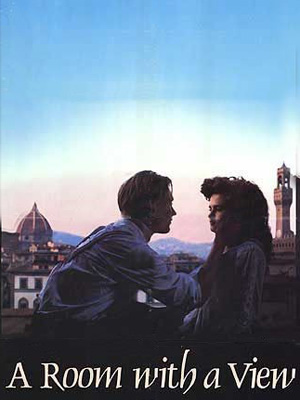
Tonight, the ABC screened ITV's remake of A Room With A View. What a waste of a production. There was no point in making another version when the excellent Merchant Ivory production is timeless, and now a classic, and definitely one of my most favourite films of all time.
The original and the best

I would rather read a speech than listen to it. I lose attention while listening, as my brain switches off from time to time. Besides, I read much faster than people can speak and am impatient.
Still, I think neuro-linguistic programming is a load of rubbish based on dodgy pseudo-science.
*************
Today was a busy day, but I managed a late afternoon nap.
Tonight, the ABC screened ITV's remake of A Room With A View. What a waste of a production. There was no point in making another version when the excellent Merchant Ivory production is timeless, and now a classic, and definitely one of my most favourite films of all time.
The original and the best
31 August 2008
that film Troy was rubbish
Wolfgang Petersen has made some dud films. Troy was one of them. The dialogue was really lame. I never bought the DVD. I thought Alexander was better.
I thought this analysis by Alex von Tunzelmann in the Guardian was amusing.
I thought this analysis by Alex von Tunzelmann in the Guardian was amusing.
No gods or gay men but a whole lot of llamas
Alex von Tunzelmann wonders why the makers of Troy bothered tackling ancient Greece in the first place
Thursday August 28 2008 09:28 BST
Big boy ... Brad Pitt as a straightened out Achilles.
Director: Wolfgang Petersen
Entertainment grade: D
History grade: D–
The Trojan war was an epic siege carried out by the Achaean (Greek) kingdoms against the city of Troy, around 1250 BC. Homer's Iliad is a poetic version of events: part history, part myth. Wolfgang Petersen's 2004 film, "inspired" by the Iliad, edited out all the gods and nymphs, and made the war into an action movie, supposedly based on history.
Scandal
In Sparta, King Menelaus holds a banquet for the Trojan princes, Hector and Paris. But Paris isn't up to speed with guest etiquette, and sneaks off to have sex with Menelaus's wife, Helen. The next day, she runs away with him to Troy. This puts Menelaus in a bate, and gives his brother Agamemnon an excuse to start a war. A simplification of the story, but not too far wrong yet.
Geography
"Sparta was never my home," Helen explains. "My parents sent me there when I was 16, to marry Menelaus." That's odd, considering that her parents were king and queen of Sparta. Helen herself chose Menelaus, a prince of Mycenae, to be her husband, and he gained the throne of Sparta by marrying her. Did no one check Wikipedia?
People
War obliges Agamemnon to enlist Greece's A-list warrior-hero (and biggest pain in the backside) Achilles, played by Brad Pitt. Pitt's Achilles is a hero with an attitude problem the size of Asia minor, who spends most of his time lounging around in a kaftan and getting laid. Not a million miles from the Homeric depiction, but much more annoying. In classical history, Achilles was disguised as a girl to avoid going to war. The film wimps out of putting Pitt in a dress, and instead has him in a cobalt blue sarong, necklace of shells and tousled honey-blond wig. He looks like a creepy yoga teacher at an overpriced Californian spa.
Sex
Achilles is sparring with his lover Patroclus, who the film insists is just his cousin. It seems the Greek hero has undergone a radical straightening process – and I'm not talking about his hair any more. No gods and no gay men. You've got to wonder why they bothered making a film about ancient Greece in the first place.
Zoology
As the Greek ships arrive at Troy, the people start panicking in their marketplace, running past the camera with a donkey, a birdcage, and two llamas. That's right: llamas. From Peru. It is impossible that there would have been any llamas in Europe or Asia for at least another 2,800 years. Unless these ones were really good swimmers.
Violence
Paris challenges Menelaus to a duel. Being a big girl's blouse, the prince of Troy is no match for the Spartan king, who lumbers around whacking him with a sword for about 30 seconds until the bleeding Paris scuttles away to hide behind Hector's skirts. Menelaus goes in for the kill, but Hector gets him first with a stab through the chest. Very wrong. The real (or real-ish) Menelaus survived the Trojan War, and was happily reunited with Helen afterwards. Petersen also prematurely bumps off Ajax and Agamemnon. At least all these deaths rule out a sequel.
Strategy
The Trojans venture out one morning to find the Greeks have vanished, leaving the beach covered in smoking embers, heaps of rubbish and plague-ridden corpses. A bit like Somerset the day after the Glastonbury Festival. They have also left a mysterious giant wooden horse. Which is seriously bad news for the gullible Trojans.
Verdict
Leaving the gods out is a terrible decision artistically, but Petersen doesn't lose any history points: it's probably safe to assume they didn't really exist. A lot of the material in the Iliad is open to question, but Troy still scores low thanks to taking liberties with what evidence there is. The making-of documentary brags about its authentic wobbly bronze swords and meticulously perfect cityscapes, but it's hard to see why you'd go to the trouble if you're just going to fill the marketplace with llamas.

I hate it when the classics are messed up for Philistine consumption.
**********
It rained all day, so I did nothing.
**********
It rained all day, so I did nothing.
21 March 2008
Indiana Jones and the chilled monkey brains
In Indiana Jones and the Temple of Doom, there is a scene where Indiana and Willie sit down to a feast of exotic food.
Live eels and giant beetles I could understand, but the chilled monkey brains was a bit shocking.
Here is a recap

**********************
It is so great to have a long four day weekend. What a pity that we can't have all the religious holidays of all religions counted as public holidays.
I didn't do much today, but did do some house cleaning - mainly the floors. Kane and I also had a long walk. I've also turned the television off tonight which is incredibly rare to try and de-junk the living room.
Live eels and giant beetles I could understand, but the chilled monkey brains was a bit shocking.
Here is a recap

**********************
It is so great to have a long four day weekend. What a pity that we can't have all the religious holidays of all religions counted as public holidays.
I didn't do much today, but did do some house cleaning - mainly the floors. Kane and I also had a long walk. I've also turned the television off tonight which is incredibly rare to try and de-junk the living room.
13 January 2008
the end of history or of democracy?
Last year, Francis Fukuyama wrote that he did not imply his thesis of 'Western liberal democracy as the final form of human government' in The End of History and the Last Man meant American style democracy as the model.
Mary Dejevsky, writing in The Independent wonders whether democracy is ideal anyway.
******************
I forgot to mention this fantastic Dutch film that was on SBS on Friday night called Phileine Zegt Sorry. The Dutch can certainly push the boundaries, tastefully.

Another superb film I watched today on DVD was The History Boys (adapted from the play). Definitely some shades of Dead Poets Society there, but far more intellectual and superior with amazing dialogue. Makes 'seize the day' lame indeed, from teacher Hector

Today was a very warm day so, much of that was on the couch with two fans on.
Mary Dejevsky, writing in The Independent wonders whether democracy is ideal anyway.
And in a follow up by Claire Soares and Katherine Butler in The IndependentMary Dejevsky: Maybe we set too much store by democracy
Could a benevolent authoritarianism, with a meritocracy at the head, provide the answer for some countries?
Published: 02 January 2008
The Houses of Parliament were recently named the most recognisable landmark in all the world. And the merest glimpse of that familiar skyline, silhouetted against the fiery cascades that ushered in the New Year, surely brought a lump to many a British throat. Just now, however, anyone tempted to espouse the evident superiority of the democracy those buildings represent has some explaining – and perhaps some rethinking – to do.
Three former British colonies in different parts of the world offer graphic illustrations of how the democratic process fails. Kenya, regarded as one of the most stable countries in east Africa, is on the brink of civil war, after an election that many voters believe was stolen on the count. Pakistan is in uneasy political limbo, following the assassination of the Opposition leader, Benazir Bhutto, and the violence her death precipitated. An announcement is expected today, postponing the elections that had brought her, fatefully, back to Pakistan.
Meanwhile, voters in the snowy farmland of Iowa tomorrow start the great national pageant that culminates in the election of a new US president. Peaceful and even joyous this feast of politics may be, but also distorted by dollars, dynasties and discriminatory electoral registers. The election of 2000, which hung on a disputed vote in Florida, a politicised Supreme Court, and an electoral college victory that contradicted the popular vote, exposed the flaws for all to see.
If the democratic process is often imperfect, however, few venture to challenge the actual principle of democracy. The clinching argument tends to be Churchill's well-used quip about democracy being the worst possible form of government – were it not for all the rest. And the presumption, when things go wrong, is that the practice, not the principle, is to blame.
If elections and everything they entail could be brought up, for instance, to Canadian or Scandinavian standards, then good sense and harmony would reign. So in Kenya, you might argue, as many have done in recent days, that everything went admirably until the count. In Pakistan, all would have been well had Ms Bhutto been afforded better protection. And how much fairer US elections might be were the selection process not slanted towards the north-east and so dependent on moneyed lobbyists. Seduced by the spectacle of "ordinary" voters standing in patient queues to exercise their democratic right, everywhere from South Africa through Romania to Hong Kong and post-Soviet Russia, I am as guilty of romanticising the democratic process as anyone.
Churchill, though, has another much-quoted and rather different quip that also deserves an outing. The best argument against democracy, he said, is a five-minute conversation with the average voter. And perhaps it is time to ask whether it is not electoral practice, but democracy – "people power" – that is the problem.
In many parts of the world elections divide voters, not along political lines – which may foster productive debate – but along ethnic, religious or clan lines. The imposition of a recognisable political process on Iraq, via elections, was supposed to bring democratic government and peace. But the US and British administration had to downgrade its objective from "democracy" to "representational government", and finally to "security". However conscientiously Iraqi voters turned out for successive elections, these only institutionalised old divisions in the new order.
The same happens in much of post-colonial Africa. The parties in Kenya are divided pretty much along tribal lines, which is why resentment of the outcome is so bitter, and potentially so destructive. In Pakistan there was a strong regional and clan element to Benazir Bhutto's appeal. She recognised that in bequeathing leadership of the People's Party to her husband and her son. If her party wins a majority in Pakistan's parliament, is this a manifestation of democracy, or is it dynasty dressed up in democratic clothes?
Where clans, birth and names matter, the circles of power become closed. A seat in parliament, even national leadership, is inherited. And while a ruling caste may produce responsible leaders born and trained to rule, it may equally spawn an effete priviligentsia that sucks the country dry, perpetuating a cycle of penury and popular revolt.
It so happens, though, that some of today's most successful countries – in the narrow economic terms used by today's number-crunchers to define national success – are neither democracies or dynasties. Some, such as Russia, might fancy themselves to be democracies, or moving in that direction; others, most egregiously China, are nowhere near. What we supporters of democracy have to recognise, however, is that there are governments that would not qualify under any definition as democratic, that are nonetheless doing well by the vast majority of their citizens. And they are doing so by virtue of an essentially technocratic, apolitical approach to nation-management.
Not all are happy, of course. Those at the bottom of the pile who see others getting rich, and those intellectuals who set more store by spiritual than material things. But who are we in the prosperous world to say that the freedom to discredit the government on the airwaves is more important – even as important – as a decent education, healthcare or having a job? Especially if standards in all these areas are rising?
In some ways, this is the old Cold-War era argument about the right to work, education and health-care versus the right to freedom of expression, movement and assembly. Then, though, these were very clear alternatives. Living standards in the non-democracies were, at best, static, and most brands of communism veered from the merely repressive to the barbaric.
But when the difference between our system and theirs is the lack of what might be described as a classic dual- or multi-party system, then what? If there is an ostensibly competent ruling group that renews itself as and when, while producing rapid growth rates and rising living standards across the board, then what? If there is not Western-style freedom, but enough to satisfy most people, then what? Judgements are surely more difficult.
Should we then allow perhaps that a stage of benevolent authoritarianism, with a selected – rather than elected – meritocracy at the head, might provide an answer, especially if it kept internecine rivalries at bay? This need not be the neo-imperialism some have argued for; it would not be imposed from outside. It would be government for, if not of or by the people. The get-out clause would be that such a stage would last only so long as economic well-being were regarded as the chief determinant of contentment.In time, surely, more personal freedom would be granted from above, or successfully demanded from below.
With the rise of China, whose leaders seem to be pursuing just such a course, we may be about to learn whether there might indeed be an alternative to democracy. If there is, we would not be contemplating the end of history, but we would be watching the end of politics as we know it.
The world's biggest democracy chooses its leader in November and the season has opened with a bang in Iowa. Before most people in the 48 other states have started paying attention, the course of the 2008 presidential election will have been shaped, such is the disproportionate influence of the two tiny states where polling begins. There is anger that Iowa and New Hampshire, two overwhelmingly white, rural states, have such a loud voice in America's democracy.Even in liberal democracies, not all people are equal.
******************
I forgot to mention this fantastic Dutch film that was on SBS on Friday night called Phileine Zegt Sorry. The Dutch can certainly push the boundaries, tastefully.
Another superb film I watched today on DVD was The History Boys (adapted from the play). Definitely some shades of Dead Poets Society there, but far more intellectual and superior with amazing dialogue. Makes 'seize the day' lame indeed, from teacher Hector
Pass the parcel. That's sometimes all you can do. Take it, feel it and pass it on. Not for me, not for you, but for someone, somewhere, one day. Pass it on, boys. That's the game I want you to learn. Pass it on.
Today was a very warm day so, much of that was on the couch with two fans on.
Subscribe to:
Comments (Atom)