A brilliant video from the Guardian showing how the incident of the Three Little Pigs might be reported in the media today. Not everything is as it seems.
Perhaps most of the rhymes, stories and tales by Mother Goose, Aesop and the brothers Grimm could be reinterpreted.
Showing posts with label literature. Show all posts
Showing posts with label literature. Show all posts
03 March 2012


15 October 2011
Measuring up. The Martians are here. The Sydney Story Factory.
Inspired by 826 Valencia, a writing centre in San Francisco for children founded by novelist Dave Eggers and educator Ninive Caligari, the Sydney Story Factory is scheduled to open late in 2011 in Redfern, Sydney. From their website
The proposed work of the Sydney Story Factory is best shown in the video Measuring UpThe Sydney Story Factory is a not-for-profit creative writing centre for children. Volunteer tutors offer free help to tell stories of all kinds. Programs are targeted at disadvantaged children, especially those from indigenous and non-English speaking backgrounds, but are open to all.
Sydney Story Factory programs are project-based, and every child walks away with a published piece of work. At the end of a one-off, two-hour workshop, children might have a bound and illustrated chap book to take home. At the end of a longer program, they may have produced a book, zine, school newspaper or short animated film. They might have had an article published in The Sydney Morning Herald, our media partner.
The Sydney Story Factory is dedicated to developing creativity. There is growing global awareness that the ability to think creatively and flexibly is key to preparing children for a future we cannot yet imagine. All programs at the Sydney Story Factory are designed to nurture the creativity that is innate to every child. Programs will increase children's abilities to express their thoughts and feelings, and give them new ways of understanding the world around them.
Read more.
The most powerful tool a child has is his or her imagination.
See reporting in the Sydney Morning Herald.
10 August 2011
City of Literature 5
I previously wrote about Dublin becoming the fourth UNESCO City of Literature. UNESCO recently designated Reykjavik in Iceland as the fifth UNESCO City of Literature. From the UNESCO website
The city of Reykjavik boasts foremost an outstanding literary history with its invaluable heritage of ancient medieval literature, the Sagas, the Edda and the Íslendingabók, Libellus Islandorum (Book of Icelanders). This longstanding tradition has naturally cultivated the city’s strength in literature education, preservation, dissemination and promotion.Reykjavik and the rest of Iceland have a very strong literary tradition dating back to the old Norse era. The first four cities of literature were English-speaking, so it is great to have a non-English-language city. It's just unfortunate that readers of the Icelandic-language probably number no more than 300,000 world-wide.
For a city of small population, approximately 200,000 habitants, Reykjavik is especially appreciated for demonstrating the central role literature plays within the modern urban landscape, the contemporary society and the daily life of the citizens. With the support of the central government of Iceland, the city continues to pursue its development plans in support of languages, translation initiatives as well as international literary exchanges.
The city’s collaborative approach through cooperation between various actors involved in literature, such as in publishing, in libraries, etc, in addition to the strong presence of writers, poets and children’s book authors is also noted to give the city a unique position in the world of literature.
With Reykjavik, the Creative Cities Network now has 29 members. As the fifth City of Literature, the city joins Edinburgh, Melbourne, Iowa City and Dublin in enriching the Network with its best literary practices.
29 September 2010
Banned Books Week
It's Banned Books Week this week in the United States (25 September to 2 October). From American Library Association.
No book in Australia had been banned since the 1970s, except for one about euthanasia, which was refused classification in 2007. Other books would be refused classification based on related laws on criminal activities, making them illegal.
It is timely then to remember what happened on 10 May 1933.
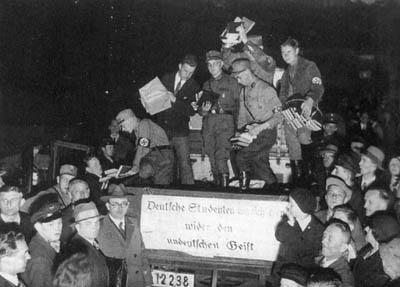
Nazi youth groups burned around 20,000 books from the Institut für Sexualwissenschaft and Humboldt University; including works by Thomas Mann, Erich Maria Remarque, Heinrich Heine, Karl Marx and H.G. Wells. Student groups throughout Germany also carried out their own book burnings on that day and in the following weeks.
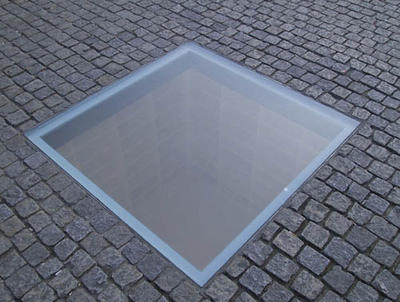
There is now a memorial/plaque at the site of the book burning (in Bebelplatz, Berlin).
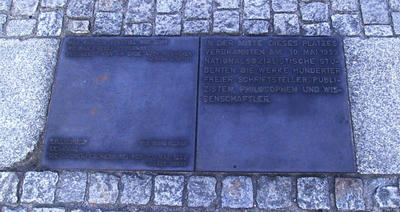
where books are burned, in the end people will burn - Heinrich Heine, 1820
I visited this site some years ago, which made me quite sad.
Banned Books Week (BBW) is an annual event celebrating the freedom to read and the importance of the First Amendment. Held during the last week of September, Banned Books Week highlights the benefits of free and open access to information while drawing attention to the harms of censorship by spotlighting actual or attempted bannings of books across the United States.The focus of the US Banned Books Week is probably more about local libraries making decisions to remove certain books that are not actually illegal.
Intellectual freedom—the freedom to access information and express ideas, even if the information and ideas might be considered unorthodox or unpopular—provides the foundation for Banned Books Week. BBW stresses the importance of ensuring the availability of unorthodox or unpopular viewpoints for all who wish to read and access them.
The books featured during Banned Books Week have been targets of attempted bannings. Fortunately, while some books were banned or restricted, in a majority of cases the books were not banned, all thanks to the efforts of librarians, teachers, booksellers, and members of the community to retain the books in the library collections. Imagine how many more books might be challenged—and possibly banned or restricted—if librarians, teachers, and booksellers across the country did not use Banned Books Week each year to teach the importance of our First Amendment rights and the power of literature, and to draw attention to the danger that exists when restraints are imposed on the availability of information in a free society.
No book in Australia had been banned since the 1970s, except for one about euthanasia, which was refused classification in 2007. Other books would be refused classification based on related laws on criminal activities, making them illegal.
It is timely then to remember what happened on 10 May 1933.
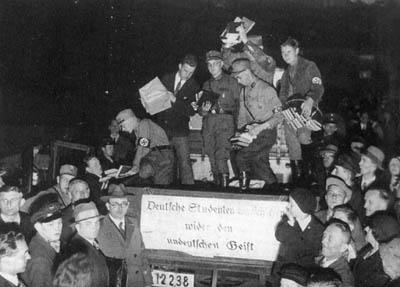
Nazi youth groups burned around 20,000 books from the Institut für Sexualwissenschaft and Humboldt University; including works by Thomas Mann, Erich Maria Remarque, Heinrich Heine, Karl Marx and H.G. Wells. Student groups throughout Germany also carried out their own book burnings on that day and in the following weeks.

There is now a memorial/plaque at the site of the book burning (in Bebelplatz, Berlin).

where books are burned, in the end people will burn - Heinrich Heine, 1820
I visited this site some years ago, which made me quite sad.
30 July 2010
City of Literature 4
I've previously written (twice) about Melbourne becoming the second UNESCO City of Literature. The first was Edinburgh and the third was Iowa City. UNESCO recently appointed Dublin as the fourth UNESCO City of Literature. From their website
While Dublin tourist guides attempt to coach visitors in the pronunciation of the eponymous Dublin greeting, ‘howaya?’ the equally common accompaniment to this – the enquiry, ‘what’s the story?’ reveals the remnants of an oral tradition which is alive and well, while also demonstrating Dubliners’ appetite for the world of books.Well deserved by a city with a rich literary heritage. Of course, the four are English-language-centric. Perhaps the home of Goethe may be also be deserving.
Ever eager for stories of themselves and others, Dubliners’ sensitivity to literary matters is acute, reinforced by an awareness of the works of the past as much as it is attuned to contemporary offerings – news of which is spread through the media, and through frequent readings, discussions and debates hosted by publishers, universities, libraries, literary organisations, book shops, pubs and cafes. The appreciation of writing and the richness of all its forms and genres is something that Dubliners display as a matter of course. Literary awareness is a form of currency in the capital, a bonding agent where pride is evident. Scepticism too fosters the famous ‘license with the Queen’s English’, for which the Irish are noted.
Writers in Dublin are not remote figures, out of step with the thrust of 21st century life but are part of the everyday landscape, much valued by Dubliners. The city has officially recognised writers by such diverse means as the conferring of the Freedom of the City, (George Bernard Shaw, Douglas Hyde and most recently, Thomas Kinsella) and through the Lord Mayor’s Awards, which in 2009 honoured the writer, Sebastian Barry. Further underlining the city’s literary credentials, the Man Booker International Prize was presented in Dublin for the first time in June 2009.
No less than four Nobel Prizes for Literature have been awarded to writers associated with the city: George Bernard Shaw, W.B. Yeats, Samuel Beckett and Seamus Heaney. Other illustrious Dublin writers of international repute include Jonathan Swift, Cardinal Newman, Oscar Wilde, Sean O’Casey, Denis Johnston, Flann O’Brien, Brendan Behan and Jennifer Johnston,
In more recent times, Dublin-based writers continue to receive international acclaim in fiction, drama and poetry. The Man Booker Prize has been conferred on Iris Murdoch, Roddy Doyle, John Banville and Anne Enright, and in 2009 Sebastian Barry received the Costa Book of the Year Award and the James Tait Black Memorial Prize for Fiction. In 2009, Colum McCann won the U.S. National Book Award for his novel 'Let The Great World Spin'. The novelist Anne Enright, has claimed that ‘In other towns, clever people go out and make money. In Dublin, clever people go home and write their books.’
27 July 2010
Golly gosh, Enid Blyton's Famous Five to undergo lashings of editing
The Guardian reported that Enid Blyton's Famous Five series of children's books are to undergo a revision to modernise its language. Extract
Farewell to the awful swotters, dirty tinkers and jolly japes: Enid Blyton's language is being dragged out of the 1940s by her publisher in an attempt to give her books greater appeal for today's children.
Starting next month with 10 Famous Five novels, Hodder is "sensitively and carefully" revising Blyton's text after research with children and parents showed that the author's old-fashioned language and dated expressions were preventing young readers from enjoying the stories. The narrative of the novels will remain the same, but expressions such as "mercy me!" have been changed to "oh no!", "fellow" to "old man" and "it's all very peculiar" to "it's all very strange".
The intention, said Hodder, is to make the text "timeless" rather than 21st century, with no modern slang – or references to mobile phones – introduced.
"The actual stories remain the same – there's no change to the plot whatsoever," said Anne McNeil, publishing director of Hodder Children's Books. "Children who read [the Famous Five books] need to be able to easily understand the characterisations and easily to get into the plots. If the text is revised [they're] more likely to be able to engage with them."
Other changes include "housemistress" becoming "teacher", "awful swotter" becoming "bookworm", "mother and father" becoming "mum and dad", "school tunic" becoming "uniform" and Dick's comment that "she must be jolly lonely all by herself" being changed to "she must get lonely all by herself".
Read more.
Oh how horrid. Jeepers. Golly gosh. Expunging so called dated words takes something out of the context of time and history.
Charles Dickens, Jane Austen and other old works are also no longer as popular due to the language and possibly the historical period in which those works are set. Of course, their copyright expired many years ago.
In high school, we studied the works of Thomas Hardy, Oscar Wilde and William Shakespeare for English (literature). Children today could start young with the old-fashioned Enid Blyton.
Expunging dated words removes an important component of literature.
20 July 2010
Christos' papou and yiayia
Christos Tsiolkas is an Australian author, whose book Dead Europe I am yet to finish so that I can begin reading The Slap. He wrote an interesting piece about his family in The Guardian on 10 July 2010, which was reprinted in the Sydney Morning Herald (Spectrum) on 17 July 2010. Excerpt
Christos is a great writer of fiction but the personal stories are always the most interesting.
Read more. Australia was built on immigration and many Australians born in Australia, while retaining language and culture, upon visiting the homelands of their forefathers, find that some of this have been preserved in time.I never met either of my grandfathers. My maternal papou had died when I was a toddler. It still remains a wounding regret of my mother's that she never had a chance to go back home to see him on his deathbed. But with a small child and my newly born baby brother, there was neither means nor opportunity for her to return. We have become so jaded with the ubiquity of air travel that we are apt to forget just how difficult, how expensive, how magical it once seemed. Dad did return to Greece to bury his father. He has returned once more, to bury his mother. After that visit, he said to me: "That's it, no more. It has finished. Greece doesn't exist for me any more."
I am grateful that I did have an opportunity to meet my grandmothers; once when I visited as a boy in 1975, and then again as a young adult in 1990. But even those encounters were made difficult by the limitations of my Greek and the overwhelming chasm of experience that separated myself, a privileged child of the developed world, and those two women, each born on the eve of the 20th century, in a peasant eastern Mediterranean world that was to be torn apart by two Balkan wars, two world wars, an occupation, two dictatorships, and a civil war. I remember sitting in a kitchen in Athens with my maternal grandmother, who was crying, wanting to know why her daughter had only visited her once in all the time she had been a migrant in Australia. I tried to explain the distances involved, the expense. Uncle Mitso, who was sitting with us, took me aside and explained that once in the early 70s he was driving his mother from the village to Athens when they came to a fork in the road. My giagia asked, "Mitso, if we turn left instead of right, can we go and visit Georgia in Australia?"
"You have to remember, Christo," my uncle said to me, "this is a woman born in a time when women were doomed to illiteracy and the shadows. Your giagia can't even read a map. And look at you, you are now a university student, you want to be a writer. You don't know how proud that makes us. But if you ever forget where you come from, fa se sfaxo [I will slaughter you]."
Though Dad was from a family of a dozen children and my mother from a family of eight, only one other of my father's siblings migrated to Australia. But my parents' friends all became part of my extended family – every adult was addressed as theo and thea, uncle and aunt. Even now as an adult travelling in Greece I will still use this form of address when speaking to an elder, and my Greek friends and cousins will laugh at me. "That is something only rural people do," they say. "Only the real hicks. Do you still use those terms in Australia? You guys are still stuck in the 50s."Italian Australians whose grandparents (nonna and nonno) had migrated, when visiting their grandparents' original village, have been told they speak old-fashioned Italian of the earlier generation.
Christos is a great writer of fiction but the personal stories are always the most interesting.
20 March 2010
City of Literature 3
I previously wrote about Melbourne becoming the second UNESCO City of Literature. The first was Edinburgh and the third was Iowa City.
The Wheeler Centre (for Books, Writing and Ideas) recently opened. It was named after Tony and Maureen Wheeler, founders of Lonely Planet, who provided a generous endowment.
The Wheeler Centre is within the complex of the State Library of Victoria, with a separate entrance on 176 Little Lonsdale Street. Description from their website
The Wheeler Centre (for Books, Writing and Ideas) recently opened. It was named after Tony and Maureen Wheeler, founders of Lonely Planet, who provided a generous endowment.
The Wheeler Centre is within the complex of the State Library of Victoria, with a separate entrance on 176 Little Lonsdale Street. Description from their website
The Wheeler CentreThe other great passion of Melbourne is the football. It would be wonderful if the two came together.
A Victorian Government initiative and the centrepiece of Melbourne's designation as a UNESCO City of Literature.
Our City of Literature status is not about Dickens on the tram, Nabokov in the Great Southern Stand or a Bronte or two over breakfast. It’s a recognition and celebration of Melbourne’s passionate readers.
We’re home to many of Australia's best and best-loved writers, past and present. We host an extraordinary network of booksellers, a diverse publishing culture and a vibrant community of thinkers.
Being a City of Literature is about engagement locally and globally. Because there’s a public conversation going on: in our papers and online, on our TVs and radios, in our workplaces and homes. Books, writing and ideas flow through Melbourne and there is something for everyone.
From 2010, Melbourne will have a new kind of cultural institution. The Wheeler Centre. A centre dedicated to the discussion and practice of writing and ideas. Through a year-round programme of talks and lectures, readings and debates, we invite you to join the conversation.
22 February 2010
Vampire-lit
Margot Adler from NPR reported in All Things Considered that she had read 75 vampire novels in the last nine months
I certainly wouldn't be putting the Twilight series at the top of the list.
In any case, vampires don't need to be kissed. They should be staked. Right through the heart.
The vampire genre is hardly original and many of the more recent novels were written for teenagers, many of whom would probably find Anne Rice's series difficult to read with all the philosophical musings.... what I started noticing as I read all these novels and looked at all the recent television shows featuring vampires is that their near-immortality isn't the most interesting thing about them. Almost all of these current vampires are struggling to be moral. It's conventional to talk about vampires as sexual, with their hypnotic powers and their intimate penetrations and their blood-drinking and so forth. But most of these modern vampires are not talking as much about sex as they are about power.
Take the CBS show Moonlight, which aired for only one season in 2007-2008. Mick St. John is a private investigator who is also a vampire. In one scene, he's trying to reason with a violent rogue vampire by telling him, "We have rules."
The rogue responds, "There are no rules: I'm top of the food chain."
"This is the central question of so many vampire novels and films, " says Amy Smith, a professor of English at the University of the Pacific. "If you had power over people, how would you use it? 'We can do what we want' vs. 'We were human, how can you treat humans as if they were cattle?' "
People keep going back to these stories because they illustrate a tension that exists in real life, Smith says.
"For example, if you earn more money than someone else, you find that you have more power: How will you use it?"
Smith teaches courses on Jane Austen and the literature of war, as well as a course on vampires in literature. She says the issue of power is both personal and global.
"How do you treat someone you love, for example?" she says. "The core question is always: Does might make right?"
I certainly wouldn't be putting the Twilight series at the top of the list.
In any case, vampires don't need to be kissed. They should be staked. Right through the heart.
15 October 2009
Frankfurter Buchmesse ist nicht verboten

foto: DPA
The Frankfurter Buchmesse (Frankfurt Book Fair) is the largest book trade fair in the world. Over 7000 exhibitors from more than 100 countries take part. International sale rights and licences are negotiated.
This year's fair is from 14 to 18 October 2009 with China as this year's Guest of Honour.
Ironic, as the People's Republic of China bans some 600 books a year. Just like its 'great firewall', written work about the Tianenmen Square events of 1989 are unlikely to be published in China.
See Der Spiegel (Deutsch, Englisch) und Die Presse (Deutsch)
24 May 2009
David Dale's list of best books about Australia
In the Sun-Herald (Sydney Morning Herald's Sunday edition) today, and compiled with the assistance of readers of his column
Cloudstreet is a great novel. What a shame works by Xavier Herbert, Patrick White and Katherine Prichard didn't make his list.1. 1788, by Watkin Tench: a new edition of his two books A Narrative of the Expedition to Botany Bay (1789) and A Complete Account of the Settlement at Port Jackson (1793), edited by Tim Flannery).
2. The Fatal Shore, Robert Hughes: "probably the most readable history of colonial NSW and Tasmania ever written ... let academics argue over its worth, but no one will doubt its value as an introduction to Australian history" (says Peter).
3. A Fortunate Life, Albert Facey: a "down-to-earth, first hand account of the life of a rambler in early twentieth century Australia" (says GC).
4. My Place, Nadia Wheatley: "a beautiful view of the many people who have made this place home" (says Kate). And another book called My Place, by Sally Morgan: "important for understanding the Aboriginal Australian's perspective of their changed homeland and the difficulties they face in trying to keep their self-worth and their families together" (says Jane).
5. Maestro, Peter Goldsworthy: "His beautiful prose makes the city of Darwin as important a character as the main protagonist" (says Beckala).
6. The Magic Pudding, Norman Lindsay: A hilarious tale of mateship and madness and the source of Australia's national metaphor.
7. For the Term of his Natural Life, Marcus Clark: "read it in the Botanical Gardens and be transported back in time" (says Chris Fuller).
8. They're A Weird Mob, Nino Culotta: The first celebration of a diverse Australia as a nation of immigrants.
9. Kangaroo, D. H. Lawrence: "It was written in 1923 but it so fresh and vivid and relates to many events happening today" (says Shirley).
10. Eucalyptus, Murray Bail: "What could be more Australian? Hopefully Rusty Crowe never gets his plans for a film version off the ground" (says Darren).
11. The Lost Continent, Terry Pratchett: "a hilarious look at everything we think makes us Australian" (says Brett).
12. Devil's Hill (Nan Chauncy): "contains wonderful chapters filled with Aussie perseverance taming a wild Tasmania - 'There's a leech having a free beer on your leg, son'" (says Dragonfly).
13. The Future Eaters, Tim Flannery: "a somewhat dry but thorough and profound discussion of the ecology of Australia, and goes a long way towards describing how we have tried to adapt to the bush" (says Nathan).
14. Grand Days, Frank Moorhouse: "quite possibly my favourite Australian novel, with a wonderful heroine ... it shows Australia as once being an important and respected part of the world stage, and it really makes me regret the insularity of modern Australia" (says tqd).
15. Cloudstreet, Tim Winton: "voted Australia's favourite book a couple of years ago," says Julie, but adds: " very different but just as good is The Shark Net by Robert Drewe. Both are set in Perth in the time frame of Eric Cooke the serial killer who was the second last man to be hanged in Australia."
04 May 2009
City of Literature 2
Two years ago, I wrote about Edinburgh becoming the first UNESCO City of Literature. Melbourne became the second City of Literature in August 2008. See www.cityofliterature.com.
The best thing to come out of this is the Centre for Books, Writing and Ideas. See article 'Bold chapter in a Melbourne's life' by Corrie Perkin in The Australian.
Melbourne is also sports mad. Now to combine the two - perhaps getting football players to talk about their favourite books.
Yeah, right.
The best thing to come out of this is the Centre for Books, Writing and Ideas. See article 'Bold chapter in a Melbourne's life' by Corrie Perkin in The Australian.
Melbourne is also sports mad. Now to combine the two - perhaps getting football players to talk about their favourite books.
Yeah, right.
11 March 2009
when looks seem to matter - Shakespeare
Now that William Shakespeare appears to be better looking than first thought (see for example, The Guardian, New York Times), some historians are revising their opinions of his personal life.

the recently discovered Cobbe portrait of William Shakespeare
Looks seem to matter.

the recently discovered Cobbe portrait of William Shakespeare
Looks seem to matter.
21 December 2008
Twilight after Interview with the Vampire
It seems that the film Twilight, adapted from the Stephenie Meyer novel has made vampires fashionable again. In an article for the BBC News magazine, Brendan O'Neill wrote
Just like JK Rowling, a lot of modern literature is derivative and really don't deserve the praise they receive, without acknowledging the pioneers of the genre.
**************
Another do nothing day.
With the hit film Twilight, the transformation of vampires from terrifying, bloodsucking killers to sensitive, emotionally-intelligent, misunderstood souls, is complete. How was Bram Stoker's legacy so drastically betrayed?O'Neill must be new to the genre. The transformation was complete over a generation ago by Anne Rice. I wonder if the new readers of Stephenie Meyers have even heard of Anne Rice.
Just like JK Rowling, a lot of modern literature is derivative and really don't deserve the praise they receive, without acknowledging the pioneers of the genre.
**************
Another do nothing day.
16 October 2008
De Civilitate Morum Puerilium Libellus
Desiderius Erasmus Roterodamus, a Dutch Renaissance humanist, wrote De Civilitate Morum Puerilium Libellus in 1536.
It was a best seller and translated into English by Robert Whittington in 1560 as De ciuilitate morum puerilium per des. Erasmum Roterodamum, libellus nunc primum conditus & editus. Roberto VVhitintoi interprete. A lytle booke of good maners for chyldren, now lately compiled and put forth by Erasmus Roterodam in latin tongue, with interpretation of the same into the vulgare englyshe tongue, by Robert VVhittinton poet laureat.
A new translation by Eleanor Merchant has just been published (amazon.co.uk). From the publisher description
I wonder if Mr Thackery used the book (in To Sir With Love).
***************
I mowed the back lawn after work.
It was a best seller and translated into English by Robert Whittington in 1560 as De ciuilitate morum puerilium per des. Erasmum Roterodamum, libellus nunc primum conditus & editus. Roberto VVhitintoi interprete. A lytle booke of good maners for chyldren, now lately compiled and put forth by Erasmus Roterodam in latin tongue, with interpretation of the same into the vulgare englyshe tongue, by Robert VVhittinton poet laureat.
A new translation by Eleanor Merchant has just been published (amazon.co.uk). From the publisher description
When did you last tell your children to put their hand over their mouth when they yawn? When did you last suggest that when they are introduced to someone they should look them in the eye? Do you remind them that they should wait until everyone is served before they start eating? And not hoover up the best bit? Do you think that the children of today have disgraceful manners? Unlike, of course, when you were young? Well, that's what Erasmus of Rotterdam thought in 1530 when he published 'de Civilitate Morum Puerilium Libellus: A Handbook on Good Manners for Children'. After all, as William of Wykeham memorably said in the 1350s, Manners Makyth Man'. A Handbook on Good Manners for Children is considered to be the first treatise in Western Europe on the moral and practical education of children. It was a massive bestseller - indeed the biggest selling book of the sixteenth century - going into 130 editions over 300 years and being translated into 22 languages. In it, Erasmus concerns himself with matters such as how to dress, how to behave at table, how to converse with one's elders and contemporaries, how to address the opposite sex and much else. For example:'It's just as rude to lick greasy fingers as it is to wipe them on your clothing; use a cloth or napkin instead'. 'Some people, no sooner than they've sat down, immediately stick their hands into the dishes of food. This is the manner of wolves'. 'Making a raucous noise or shrieking intentionally when you sneeze, or showing off by carrying on sneezing on purpose, is very ill-mannered'. 'To fidget around in your seat, and to settle first on one buttock and then the next, gives the impression that you are repeatedly farting, or trying to fart'. The advice is as relevant today as it was 500 years ago.Indeed.
I wonder if Mr Thackery used the book (in To Sir With Love).
***************
I mowed the back lawn after work.
13 July 2008
the best Booker
Midnight's Children by Salman Rushdie was voted the best ever winner of the Booker prize.
I tried to read it about 20 years ago, but could not finish it. I wonder if I should give it another go.
*************
Another very football-centred weekend away. Despite a losing game for my main team, I did enjoy it and was able to catch up with a few of my favourite players.
It is good to be home though.
I tried to read it about 20 years ago, but could not finish it. I wonder if I should give it another go.
*************
Another very football-centred weekend away. Despite a losing game for my main team, I did enjoy it and was able to catch up with a few of my favourite players.
It is good to be home though.
01 June 2008
Vidal on Capote
There is a great article about Gore Vidal, one of the literary giants of our times. Geniuses never seem to get along with other geniuses.
******************
I have been having a great time in Brisbane. On Friday, I slept in and then went into the city, firstly to the Queensland Art Gallery. As I left, I asked the guy at the front desk where they hid all their good stuff. I thought I saw three Monet's but they were John Russell's, an Australian impressionst. There was a tiny Rodin and two earlier works of Margaret Preston's. Not even their Indigenous collection had very much.
Later, I met another old college friend, Jon, for dinner dinner at Govinda's, a vegetarian restaurant, which is run by the local Hare Krishna Temple. Good healthy wholesome cheap food. Later we went to the Valley for a few beers. Fortitude Valley is where everybody flocks for a night out in Brisbane.
On Saturday, it was also my birthday. I went to a football game in the afternoon between our reserves team and they won. Must be me bringing luck. Then it was off to The Den, which is our football club's social club for dinner and a drink with other footy-obsessed friends, before heading to the game. My team won! It was the perfect birthday gift. I sat near the interchange bench again.
After the game, I met up with a player friend of mine for a catch up, which was great although I waited nearly two hours as he had physiotherapy. Highly decorated (he has a lot of medals), but a genuine and nice guy.
Today (Sunday) has been a bit more relaxing. My brother Joseph and I went out for laksa for lunch. This evening, my other brother Thomas, and Sarah joined us for dinner at a steak house. I'd been out most nights since I arrived, so it was good to do the family thing.
For the coming week, I will spending the days at my football club helping out.
"Capote I truly loathed. The way you might loathe an animal. A filthy animal that has found its way into the house."He would have hated Oscar Wilde too.
"What was Capote doing that you didn't like?" "Lying," Vidal shouts. "The one thing I hate most on this earth. Which is why I do not have a friendly time with journalists."
******************
I have been having a great time in Brisbane. On Friday, I slept in and then went into the city, firstly to the Queensland Art Gallery. As I left, I asked the guy at the front desk where they hid all their good stuff. I thought I saw three Monet's but they were John Russell's, an Australian impressionst. There was a tiny Rodin and two earlier works of Margaret Preston's. Not even their Indigenous collection had very much.
Later, I met another old college friend, Jon, for dinner dinner at Govinda's, a vegetarian restaurant, which is run by the local Hare Krishna Temple. Good healthy wholesome cheap food. Later we went to the Valley for a few beers. Fortitude Valley is where everybody flocks for a night out in Brisbane.
On Saturday, it was also my birthday. I went to a football game in the afternoon between our reserves team and they won. Must be me bringing luck. Then it was off to The Den, which is our football club's social club for dinner and a drink with other footy-obsessed friends, before heading to the game. My team won! It was the perfect birthday gift. I sat near the interchange bench again.
After the game, I met up with a player friend of mine for a catch up, which was great although I waited nearly two hours as he had physiotherapy. Highly decorated (he has a lot of medals), but a genuine and nice guy.
Today (Sunday) has been a bit more relaxing. My brother Joseph and I went out for laksa for lunch. This evening, my other brother Thomas, and Sarah joined us for dinner at a steak house. I'd been out most nights since I arrived, so it was good to do the family thing.
For the coming week, I will spending the days at my football club helping out.
28 April 2008
Shakespeare for the masses
From BBC News
It is unfortunate that the new readership won't be able to appreciate the original language of Shakespeare. It is one of the reasons for reading his works in the first place.
*************
It was quite cold today. Thankfully it was sunny.
Author pens Shakespeare, 'Innit'
 Author Martin Baum's book has 15 abridged versions of Shakespeare
A Dorset author has rewritten some of the works of William Shakespeare entirely in so-called "yoof speak".
Satirist Martin Baum said his book, To Be or Not To Be, Innit, was a way of combining text speak and street slang with the Bard's classics.
The book includes Macbeff and Two Geezas of Verona, among 15 abridged versions of Shakespeare's work.
Mr Baum, 48, said "text speak and street slang" was becoming normal for a lot of young people.
He added: "The inspiration came from the fact that while people of my generation were brought up with and educated in the classics, I have found through my son and various headlines in the national press that the youth of today are not.
"I'm a satirist, and I've also been aware through material I've written that text speak and street slang is becoming the norm for a lot of the younger generation.
"It struck me that there had to be a way to bring the two together.
"[The book] was merely intended initially to cause a few ripples and provide entertainment around the time of Shakespeare's birthday.
"Traditionalists are very protective - understandably - but they don't have an exclusivity on the classics."
Other titles include Much Ado About Sod All and All's Sweet That Ends Sweet, Innit.
"Shakespeare created so many new words, so we won't be precious about it
Jacqui O'Hanlon, RSCThe Royal Shakespeare Company (RSC) - which is running a campaign to introduce more people to the Bard, entitled Stand Up for Shakespeare - broadly welcomed the book.
Jacqui O'Hanlon, the RSC's director of education, said: "We know that when young people are introduced to Shakespeare in a positive way, they find a real relevance.
"Shakespeare is much more than a masterful story teller, it's the way he uses his stories and the language he uses.
"Shakespeare created so many new words, so we won't be precious about it.
"We want people to have a lifelong association with Shakespeare, so this may help."
Mr Baum, from Verwood, is planning to write his next book based on the work of Charles Dickens.


Shakespeare wrote for the masses and ordinary folk, so it is good that his works can again have wider appeal.
It is unfortunate that the new readership won't be able to appreciate the original language of Shakespeare. It is one of the reasons for reading his works in the first place.
*************
It was quite cold today. Thankfully it was sunny.
08 January 2008
Buffy the Vampire Slayer
As every aficionado of Buffy the Vampire Slayer (tv series) knows, the story didn't end after season seven.
Season eight continued in comic form.
I have been collecting them and today I picked up my stash of #7 to #10

cover of Buffy the Vampire Slayer Season 8: #10 Anywhere but Here
Season eight continued in comic form.
I have been collecting them and today I picked up my stash of #7 to #10
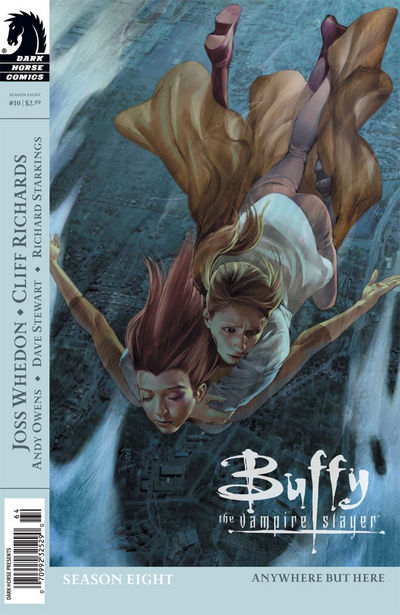
cover of Buffy the Vampire Slayer Season 8: #10 Anywhere but Here
Buffy and Willow meet a demon who reveals a dim future, forcing the two to reflect on their past. Meanwhile, back in Scotland, Dawn confides in Xander the deed that led to her mysterious growth spurt.Woohoo!
09 July 2007
City of Literature
From the UNESCO website
Monday. It always comes around too quickly.
In October 2004 Edinburgh, UK became the first city to join the Creative Cities Network as a City of Literature.
See Edinburgh City Profile (PDF) and the Edinburgh Candidature File
This designation has provided a focus for literary activities and has attracted prestigious events such as the Man Booker International Prize for Literature to Scotland. The City of Literature now seeks to build on this honour and to deliver clear benefits for Scotland by promoting it through literature and by establishing the city of Edinburgh as an example for all the other cities of literature that follow.Not only is Edinburgh the home of many world-famous contemporary authors, but it also boasts many historic literary legends such as Sir Arthur Conan Doyle, the creator of Sherlock Holmes, Sir Walter Scott, the author of Ivanhoe and Rob Roy, and Robert Louis Stevenson, who wrote Jekyll and Hyde and Treasure Island.
According to preliminary estimates, Edinburgh, UNESCO City of Literature is expected to generate approximately £2.2m a year for the city and £2.1m to the rest of Scotland, in terms of income from hosting major new festivals, events and conferences in the city, higher levels of tourism and relevant book sales.
The Iranian city of Shiraz has been nominated to become the second City of Literature.
Melbourne will be putting in a bid to become a City of Literature. See - The Age.
Both Melbourne and Sydney actually have very strong literary traditions.
Even better if Melbourne has something like the London Book Project to circulate free books on public transport.
**************************Monday. It always comes around too quickly.
Subscribe to:
Comments (Atom)