Showing posts with label environment. Show all posts

12 November 2011

Another (sub) species, extinct

According to the latest update of the IUCN Red List of Threatened Species™, "the Western Black Rhino (Diceros bicornis longipes) has officially been declared extinct." (see IUCN news release).

The loss of a rhinoceros sub-species is a travesty, particularly as it was hunted to extinction.

The International Union for Conservation of Nature (IUCN) is a democratic membership union composed of over 1,000 members, 11,000 scientific experts in various thematic commissions with 1,000 staff, working together in more than 160 countries to help the world find pragmatic solutions to the most pressing environment and development challenges.

The Australian Department of Sustainability, Environment, Water, Population and Communities is a country member, along with nine state government agencies and 16 non-government organisations.

The United States Department of State Bureau of Oceans and International Environmental and Scientific Affairs and the United Kingdom Department for Environment, Food and Rural Affairs are also country members.

10 November 2011

Water from thin air

The winner of the James Dyson Award was announced on 8 November 2011. From James Dyson Award website
The James Dyson Award is open to product design, industrial design and engineering university level students (or graduates within 4 years of graduation) who have studied in the following countries: Australia, Austria, Belgium, Canada, France, Germany, Ireland, Italy, Japan, Malaysia, the Netherlands, New Zealand, Russia, Singapore, Spain, Switzerland, UK and USA.
The award is £10,000 for the student or student team (up to four members) winner, £10,000 for their university department and the James Dyson Award trophy and Certificate.

This year, the award was won by Edward Linacre, a Swinburne University of Technology graduate, for his Airdrop invention, in which
Moisture is harvested out of the air to irrigate crops by an efficient system that produces large amounts of condensation. A turbine intake drives air underground through a network of piping that rapidly cools the air to the temperature of the soil where it reaches 100% humidity and produces water. The water is then stored in an underground tank and pumped through to the roots of crops via sub surface drip irrigation hosing.
Read more.

See also


In his own words


Amazing ingenuity from Australia - an innovative and practical solution to a major problem that is also cheap to implement. Congratulations to Mr Linacre.

15 August 2010

Giant salamanders

From National Geographic's channel on YouTube
Giant salamanders, some growing up to 5-feet in length, face a barrier of dams in Japan, built to control flooding. Now it's hoped a new system will help these giant amphibians get upstream past the dams to lay their eggs.


Amazing creatures and an innovative way to save them.

See also breeding program at Smithsonian's National Zoo (report by National Geographic).

26 July 2010

End of the voyage of the Plastiki

Back on 21 March 2010, I wrote about the Plastiki setting sail from San Francisco to Sydney to raise awareness about maritime pollution. This morning, the Plastiki sailed into Sydney Harbour. From press release
After sailing more than 8,000 nautical miles and spending 128 days crossing the Pacific, the world’s largest ocean, in a boat made of 12,500 plastic PET bottles, the Plastiki expedition and her crew have safely and successfully reached their planned destination of Sydney to cheers of welcome and support.

Arriving at Sydney Heads at 11.10am local time with a 12knot south south easterly breeze, the Plastiki triumphantly sailed into Sydney Harbour to cheers of welcome and support from a small spectator flotilla. The historic expedition was completed in four legs : San Francisco – Kiribati ‐ Western Samoa ‐ New Caledonia before reaching the Australian Coast (Mooloolaba) on Monday 19 July and continuing on to Sydney.

“It’s an incredible feeling to finally arrive in Sydney. We had great faith in the design and construction of Plastiki and while many people doubted we’d make it, we have proved that a boat made from plastic bottles can stand up to the harsh conditions of the Pacific.” expedition leader, David de Rothschild said.

De Rothschild, 31 from the United Kingdom, paid tribute to his fellow adventurers, Jo Royle (Skipper), David Thomson (Co‐Skipper), Graham Hill (Founder of Treehugger.com), Olav Heyerdahl, Matthew Grey, Luca Babini (Photographer), Vern Moen (Myoo Media Film maker), Max Jourdan and Singeli Agnew (National Geographic Film makers) for their skill and commitment during the voyage.

“Jo and the rest of the crew did a remarkable job sailing the Plastiki safely across the Pacific and it is due to their collective efforts that we’ve been able to raise global awareness of the issue of plastic waste in the world’s oceans.

If there’s waste, it’s badly designed in the first place, and we need to start taking a serious look at the way we produce and design every product we use in our lives,” De Rothschild said.
Read more. According to the Plastiki blog, Sydneysiders are also able to visit the craft
The Plastiki will be moored at Australian National Maritime Museum, Darling Harbour for a month and will be open to visitors on Sunday August 1st, so if you weren’t able to make it down today then you’ve still got a chance to explore this one of a kind plastic bottle boat. Keep an eye out for the more information by following us on Facebook and Twitter.
Photos from Getty (Brendon Thorne) via PicApp

SYDNEY, AUSTRALIA - JULY 26: British adventurer and environmentalist David de Rothschild sails as the 'Plastiki' arrives at Sydney Harbour, completing the 12,860 kilometre journey from San Francisco to raise environmental awareness on July 26, 2010 in Sydney, Australia. The 60-foot catamaran made from 12,500 plastic bottles was designed by Australian Andrew Dovall and embarked on the 128 day journey to bring attention to condition of our oceans and the amount of plastic debris in the Pacific. (Photo by Brendon Thorne/Getty Images)

SYDNEY, AUSTRALIA - JULY 26: British adventurer and environmentalist David de Rothschild sails as the 'Plastiki' arrives at Sydney Harbour, completing the 12,860 kilometre journey from San Francisco to raise environmental awareness on July 26, 2010 in Sydney, Australia. The 60-foot catamaran made from 12,500 plastic bottles was designed by Australian Andrew Dovall and embarked on the 128 day journey to bring attention to condition of our oceans and the amount of plastic debris in the Pacific. (Photo by Brendon Thorne/Getty Images)

See also
- Sydney Morning Herald (has video)
- NPR
- United Nations Environment Programme (UNEP)

04 June 2010

It ain't just oil

BP is describing one of the biggest environmental disasters in history as the "MC252 oil well incident in the Gulf of Mexico."

According to BP, as at 1 June 2010, the "cost of the response to date amounts to about $990 million, including the cost of the spill response, containment, relief well drilling, grants to the Gulf states, claims paid and federal costs. It is too early to quantify other potential costs and liabilities associated with the incident."

The White House has sent a bill to BP for $69 million. After all, US taxpayers should not have to pay to fix a mess created by a large corporation.

In dollar amounts, it is a high price to pay.

Even higher, is the cost to the environment and living creatures.

Raw video footage from AP


Still photos at Boston Globe.

Live feed of oil leak (more like gush) from PBS
Streaming live video by Ustream

See Deepwater Horizon Response

18 May 2010

Kit Kat has a break from orangutan killing palm oil

After a two month campaign by Greenpeace (UK) against the use of palm oil by Nestlé over concerns about deforestation and the effect on orangutans, the company has just announced its suspension of purchase from suppliers involved in deforestation

The supply chain of palm oil is very complex and there are no quick and easy solutions. We have conducted an in depth analysis of our supply chain in order to create transparency and detailed action plans. Read more about the complexity of the palm oil supply chain in the RSPO Supply Chain Systems Overview (pdf, 3.95MB)

As a first step, we have suspended all purchases from Sinar Mas, which has admitted to mistakes in the area of deforestation. We can also confirm that we have made arrangements with a number of suppliers, including Cargill, to suspend purchasing from Sinar Mas for delivery to our European factories.

The YouTube video was quite graphic


See Greenpeace's response following the announcement by Nestlé.

According to Australia's Heart Foundation, palm oil isn't that healthy.
Palm oil is a vegetable oil derived from the oil of the palm plant and does not contain any cholesterol. However, palm oil is one of the two tropical oils that the Heart Foundation recommends to avoid (the other is coconut oil). Palm oil contains 55% saturated fat, 8% polyunsaturated and 37% monounsaturated. While it contains no trans fat, it contains too much saturated fat and not enough unsaturated fat to be recommended by the Heart Foundation.
Unfortunately in Australia, palm oil is usually shown in ingredients lists as 'vegetable' oil.

09 April 2010

Camel steak

Last year, CNBC anchor Erin Burnett reacted strongly on air to reports of Australia's plan to cull wild camels. As reported by ABC (Australia)

Erin Burnett, an anchor on American financial news channel CNBC, launched a verbal attack targeting Mr Rudd following the Federal Government's decision to spend $19 million culling feral camels in the outback.

"There is a serial killer in Australia and we are going to put a picture up so we can see who it is," a stern-faced Burnett said during a segment on CNBC on Tuesday.

A large photo of Mr Rudd was then shown.

"That would be the Prime Minister of Australia, Kevin Rudd," Burnett said.

"OK, well, do you know what he is doing?

"He has launched air strikes - air strikes - against camels in the outback."

Burnett, with a stuffed toy camel sitting in front of her, broke away from her usual analysis of stock movements on Wall St to vent about the camel cull.

She raised the issue during a segment with CNBC's colourful financial guru Jim Cramer.

Burnett said there were one million camels living wild in Australia and the animals would be shot.

"They are slaughtering them?" Cramer, looking shocked, asked Burnett.

"They are slaughtering them," Burnett replied.

She also complained the meat and milk from the camels would be wasted.

"Apparently there is $1 billion of meat out there," Burnett said.

"Are they going to do anything with it?" Cramer asked.

"No. They're just slaughtering them," she said.

"That's genocide. Camelcide," Cramer commented.

Burnett then told Cramer she hoped Australians would see her segment.

"I hope they have this on in the morning in Australia," she said.

As the discussion came to a close the photo of Rudd re-appeared on the screen.

"There he is," Burnett said.

"That is the man who approved it."

Erin Burnett is well known for having a fascination for camels. At the time, it was hard to tell whether her statement was expressing an outrage that camels would be killed, or that she was concerned that the killing would be wasteful.

An American journal, The Atlantic Monthly, has now suggested that camels should be eaten.

Camels were first brought to Australia from the Canary Islands in the 1840s as beasts of burden. They carried goods across the harsh, Martian-red desert. As roads were built, they were gradually released into the wild. Now Australian camels make up the largest wild herd in the world, numbering about a million. With no natural predators, they are expected to double in population every decade.

Like most foreign species introduced into Australia’s delicate ecosystem, camels have wreaked havoc. They feed on roughly 80 percent of Australia’s plant species, and have pushed some to the brink of extinction. In their search for water, they soil Aboriginal drinking holes, destroy everything from fences to air conditioners, and cause more than $12 million worth of damage each year. In response, the Australian government plans to cull 349,000 of them, at a cost of $17 million.

Dann thinks this is a waste of potentially valuable meat. He concedes that camel is still a novelty in Australia, but he sees a lucrative market in the Middle East, where it’s widely accepted. If he wins government approval to export, he aims to up the number of animals he slaughters each week from 20 to 300. “It’s a good meat, low in cholesterol,” he said. “I would hate to see it go to the worms.”

The American interest in Australia's feral camels is interesting. I wonder if there is a market in the US for camel meat.

21 March 2010

Voyage of the Plastiki

A boat made up of plastic bottles and other recycled material, named the Plastiki, has set sail from San Francisco on a 100 day journey to Sydney, to raise awareness about maritime pollution. See AP video


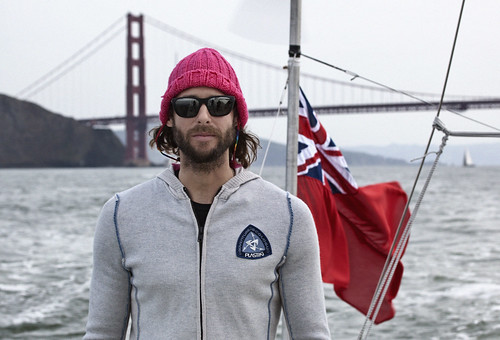
The project is led by David De Rothschild (photo by Plastiki press centre)


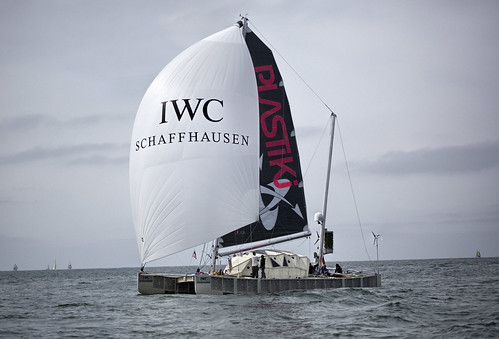
The boat is a catamaran (photo from Plastiki press centre)


You can follow the journey online
- www.theplastiki.com
- www.adventureecology.com
- photos on Flickr

Of course, the name Plastiki is an acknowledgment of the famous Kon-Tiki expedition of the 1940s.

19 January 2010

carpe carp

Carp is a declared noxious species in Australia and once caught, it is illegal to return it to a waterway. See New South Wales Department of Primary Industries - Carp (under freshwater pests).

In the United States, the Louisiana Department of Wildlife and Fisheries has developed a market for carp as food, as a means to reduce number. Reported by NPR

Building off a state-developed marketing plan, a group of Louisiana-based companies has started a joint venture that will put Asian carp on retail shelves within weeks.

The fish are being marketed as silverfin, the name it was given in a marketing plan developed by the Louisiana Department of Wildlife and Fisheries. The agency is promoting recreational and commercial applications of an invasive fish that has caused huge problems for boaters in northern states.

Rather than poisoning the fish to get rid of them like northern states have done, wildlife officials are opting to make them an appetizing meal.

As for the taste?
Parola said that it's a cross between scallops and crab meat. "Consumers will love it," he said.
Carp has been eaten in the from of gefilte fish (ground) for years.

In Australia, not many people would eat carp, not even people from Asian backgrounds who have better choices with ocean fish. Polish migrants do prepare carp in aspic, if they are patient with the small bones.

Still, it is something our fisheries pest control authorities could learn from Louisiana.

21 July 2009

What if they taste better than whale?

Reported in Japan's Daily Yomiuri newspaper
'Jellyfish typhoon' bearing down on Japan

Swarms of giant Nomura's jellyfish are expected in the coastal waters around Japan this year, a "jellyfish typhoon" that threatens to inflict massive damage to the fishing industry.

One of the biggest varieties of jellyfish in the world, Nomura's jellyfish--also known as Echizen jellyfish--weigh as much as 200 kilograms and have heads reaching up to about 2 meters in diameter. The Fisheries Agency warned fishermen across the country about the arrival of the jellyfish after it received several reports of sightings in the sea around Japan this month.

Nomura's jellyfish are a nightmare for fishermen--damaging fishing nets with their heavy weight and harming fish caught in the nets with their toxins. Fishermen also risk getting stung when removing the jellyfish from their nets.

They may even force fishermen to stop fishing.

In 2007, the last time hoards of Nomura's jellyfish were seen in Japan's coastal waters, the agency received about 15,500 complaints from fishermen concerning damage caused by the jellyfish.

According to experts, an unusually huge number of Nomura's jellyfish are highly likely to come to Japan's coastal waters this year. They usually propagate in the eastern part of the Yellow Sea, then some will drift toward Japan on the Tsushima Current.

Researchers with the Fisheries Research Agency surveyed the central waters of the East China Sea and coastal waters around Jeju Island, South Korea, in June and confirmed the presence of a few Nomura's jellyfish within 10 meters of their vessel.

"The situation is quite similar to that when a large number of these jellyfish came to Japan's coastal waters in the past," said Hideki Akiyama, head of the agency's East China Sea Fisheries Oceanography Division.

Based on the June survey, the Fisheries Agency warned the jellyfish would reach the sea off Tsushima island in Nagasaki Prefecture early this month. Since around July 4, the agency has received a number of reports that small Nomura's jellyfish have been seen in the sea.

Prof. Shinichi Ue of Hiroshima University, a leading expert on Nomura's jellyfish, said highly concentrated groups of the variety had been observed in the Yellow Sea as of Wednesday.

"The arrival [of a large number of the jellyfish] is inevitable. A huge 'jellyfish typhoon' will hit the country," Ue said.

A fertilized egg of a Nomura's jellyfish turns into a polyp that resembles a flower. As the polyp travels, it sheds parts of its body in the form of a cellular mass called a podocyst. The podocyst rests at the bottom of the sea and grows into a polyp that later turns into a jellyfish.

To complicate matters, podocysts maintain their form until the surrounding environment becomes optimal for their growth into a jellyfish.

Last year, there were few sightings of Nomura's jellyfish and no complaints from fishermen were reported.

"I believe the environment in the East China Sea was bad, so the podocysts slept in that form last year," Ue said. "However, they've all turned into polyps this year, resulting in a plague of jellyfish."

The most recent massive infestation of Nomura's jellyfish was observed in 2005. The year before that, only a few were reported.

Experts expect more jellyfish this year than in 2005. They are expected to drift north in the Sea of Japan to Aomori Prefecture, then into the Pacific Ocean through the Tsugaru Strait, then go south. They are expected to plague the coastal waters around Japan through February.

(Jul. 11, 2009)


Perhaps the whalers could be employed to harvest the jellyfish.

08 July 2009

big backyard birds

Brush turkeys are native to Australia, but we aren't allowed to eat them. From ABC
Back from the bush: turkeys hit Sydney backyards
By Kathryn Stolarchuk for The World Today

Posted 8 July 2009


Here to stay: the indefatigable brush turkey. (ABC News: Giulio Saggin)

Brush turkeys have been invading suburban Sydney on a scale not seen since the ibis moved in many years ago.

The large, aggressive birds are playing havoc with gardens, frightening pets, eating their food and building huge mounds.

But the experts are warning they are here to stay; it is illegal to eat a protected native species and people should get used to them.

The brush turkey is a ground-dwelling bird about 70 centimetres long that lives exclusively in the Australasian region of the world.

Dr Ann Goeth is a senior threatened species officer with the Department of Environment and Climate Change and also one of the world's leading authorities on the local birds.

She believes the turkeys are moving into suburban areas of Sydney for a number of reasons, including the drought.

"They also find a lot of food in the kind of mulch and gardens that people provide," she said.

"A lot of people indirectly attract these birds as well by either providing compost heaps where the birds can feed from, they have bird feeders, which brush-turkeys really like as well, or they might leave their pet food out on the back porch, which brush turkeys really like to eat as well."

Gardener's nightmare

Geoff Ross, a wildlife management officer with New South Wales National Parks and Wildlife, says the birds are also making a mess of backyards.

"This species are megapodes, which means they build mounds," he said.

"So the males incubate the eggs laid by females in these large mounds of garden material that's effectively breaking down and providing heat and that incubates the eggs.

"We're seeing a lot more of these mounds around the inner-urban areas now - one reporting of an instance in Mosman.

"Mounds are being located in Epping, Lane Cove and places like that on the North Shore. So they are gradually moving into those urban interfaces."

Mr Ross says it is this building of the mounds and their propensity to destroy flower beds with their enthusiastic scratching that makes the turkeys the enemy of local gardeners.

"They'll scratch up a lot of backyards' garden material to build that mound, particularly with people who have spent a lot of resources in maintaining a natural urban bushland, then of course brush turkeys will avail themselves of that very natural area and start building mounds in that backyard," he said.

But Dr Anne Goeth reminds people that brush turkeys are a native species and protected by law.

"So you're not allowed to catch them. You're also not allowed to actually destroy these mounds when there is eggs in there because you would destroy the eggs and the chicks," she said.

No Christmas turkey

And she says you are definitely not allowed to put them on the barbie.

"I mean they're big birds, big turkeys and obviously it's easier to shoot one of those than buy something if you are hungry, but hopefully that's not happening anymore these days," she said.

"I've been told it's quite tough. I have never eaten them myself, of course."

Mr Ross recommends that instead people learn to be tolerant of their new neighbours.

"Now if you do have a mound you can seek National Parks' guidance on how to deal with that mound in your back garden," he said.

"If it's particularly impacting upon you or your family, we can offer things like we give you a permit that will allow you to cover the mound with a tarpaulin and so the male can't work the mound, or you can cover it with mesh.

"You can use sprinklers to divert the male's attention away from the mound. Things like that, particularly now that we're allowed to hose our gardens again."

He says Sydneysiders worried about the turkeys should follow the example of their Queensland counterparts.

"They are here to stay and it's one of being able to adapt to them being there and of course, this is nothing new for those people who live north of the border in Queensland," he said.

"Brush turkeys are an everyday occurrence in the backyards of all Brisbane residents and residents on the Gold Coast.

"So wherever you reside in those warmer coastal areas you get a few brush turkeys and again in Sydney they're just recapturing, if you like, those habitats they used to live in before."

I think it would be cool to have one in the backyard.

28 March 2009

Earth Hour - Vote Earth

We participated in Earth Hour last year (from 8 to 9pm) and half way through this year's Earth Hour (which started at 8.30pm). The lights may be off, but the television (and computer) must stay on as my football team is playing at the moment, and in the lead.

From Earth Hour website
Earth Hour began in Sydney in 2007, when 2.2 million homes and businesses switched off their lights for one hour. In 2008 the message had grown into a global sustainability movement, with 50 million people switching off their lights. Global landmarks such as the Golden Gate Bridge in San Francisco, Rome’s Colosseum, the Sydney Opera House and the Coca Cola billboard in Times Square all stood in darkness.

In 2009, Earth Hour is being taken to the next level, with the goal of 1 billion people switching off their lights as part of a global vote. Unlike any election in history, it is not about what country you’re from, but instead, what planet you’re from. VOTE EARTH is a global call to action for every individual, every business, and every community. A call to stand up and take control over the future of our planet. Over 74 countries and territories have pledged their support to VOTE EARTH during Earth Hour 2009, and this number is growing everyday.


Whatever effect it might have, the most significant is global solidarity.

05 December 2008

as one sinks, another rises

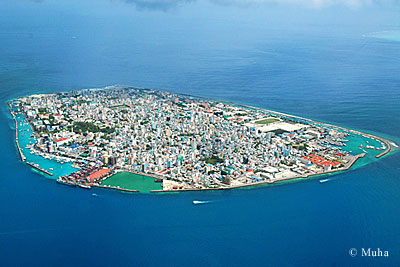
Last month, many media outlets (including CNN) reported that Maldives is looking for a new homeland in order to relocate its people as its many islands will eventually be submerged by rising sea levels due to global warming.

the capital, Male is on one island and protected by a sea wall


Meanwhile, developers in Dubai are reclaiming land from the sea in the form of designer islands such as Palm Islands and The World.

Palm Jumeirah


Perhaps the Maldives could buy into an island development in Dubai, before that too sinks.

**********************
The weekend couldn't come fast enough

01 October 2008

eating kangaroo to save the planet

Reported in The Australian, the Australian government's chief climate change adviser has suggested we eat kangaroo to fight climate chang
Eat kangaroo to help combat climate change: Ross Garnaut
Samantha Maiden and Christian Kerr | October 01, 2008

AUSTRALIANS should replace beef and lamb on the dinner table with kangaroo to fight climate change, Kevin Rudd's chief climate change adviser says.

Professor Ross Garnaut has suggested in his final report on climate change that the nation's farmers should switch to the low-emission meat.

He also suggests Australian families should give up beef and eat more kangaroo.

"Sheep and cattle production is highly vulnerable to the biophysical impacts of climate change, such as water scarcity," he says.

"Australian marsupials emit negligible amounts of methane from enteric fermentation. This could be a source of international comparative advantage for Australia in livestock production.

"For most of Australia's human history of around 60,000 years, kangaroo was the main source of meat. It could again become important."

Professor Garnaut notes there are some barriers to this change, including livestock and farm-management issues, consumer resistance and the gradual nature of change in food tastes.

Michael Mulligan, president of the Kangaroo Industry Association, told the Taste of Kangaroo symposium at Sydney's Parliament House earlier this week that the national symbol had become a "more and more accepted everyday meat".

Professor Garnaut notes that researchers have modelled the potential for kangaroos to replace sheep and cattle for meat production in Australia's rangelands, where kangaroos are already harvested.

"They conclude that by 2020, beef cattle and sheep numbers in the rangelands could be reduced by seven million and 36 million respectively, and that this would create the opportunity for an increase in kangaroo numbers from 34 million today to 240million by 2020," he says.

But matters may be complicated by the treatment of agriculture under the proposed emissions trading scheme.

While Professor Garnaut has said agriculture should be included in an ETS as soon as possible, the Government's own Carbon Pollution Reduction Scheme green paper says it will not be covered until at least 2015.
And a recipe was also included in the article
SPICY THAI KANGAROO SALAD

INGREDIENTS
1 tablespoon oil
400g kangaroo fillet, sliced thinly
2 eschalots, chopped finely
1 green onion, chopped
2 tablespoons lime juice
2 tablespoons fish sauce
2-3 teaspoons ground red chilli
2 tablespoons Oz Lemon
2 teaspoons sugar, or to taste
1/3 cup mint leaves
1/3 cup Thai basil leaves
Lettuce cups
Steamed jasmine rice

Khao koor
3 tablespoons uncooked jasmine rice

METHOD
Heat oil in a wok; cook kangaroo so that it seals but is still medium. Remove from heat and place in a bowl with the onions, lime juice, fish sauce, chilli, Oz Lemon, sugar and herbs; toss to combine. Serve with lettuce cups or jasmine rice and sprinkle with khao koor (ground toasted rice). To make khao koor, heat a wok until fairly hot; add uncooked jasmine rice. Toss rice until it starts to turn golden brown. Remove from heat and allow to cool. Grind to a fairly coarse powder with a mortar and pestle or a blender.
Serves 2-4

MIX & MAX
For this thrillingly flavoured 'roo dish, you need a red with bold personality, heaps of spiciness, perfume and a rich, almost sweet fullness - a Barossa grenache or a shiraz viognier blend.
Kangaroo is a very tasty meat. During cooking, the smell is a bit strong though.

*********************
Midweek.

03 September 2008

salmon or venison?

According to a study published in BMC Ecology, wolves prefer salmon to venison.  Also reported in New Scientist

Venison's fine, but wolves prefer salmon

  • 00:01 02 September 2008
  • NewScientist.com news service
  • Gursharan Randhawa

Wolves are not quite the red-blooded hunters we thought they were. It appears they prefer to dine on a nice piece of salmon rather than deer.

Ecological studies into predator-prey relations have traditionally shown that wolves feed on hoofed animals like deer, elk and moose, particularly during the spring and summer. However, ecologists have recently noticed that the fanged animals can capture and eat salmon in the autumn when the fish swim upriver.

The suggestion has been that wolves fall back on salmon as an alternative food source when deer are scarce. But Chris Darimont and colleagues at University of Victoria and Raincoast Conservation Foundation, British Columbia, Canada, have shown that wolves actually prefer salmon, whether or not deer are on the menu.

Darimont and colleagues spent four years studying the feeding habits of eight packs of wolves in the Great Bear Rainforest region of British Columbia.

Seasonal snack

Spawning salmon are unavailable for most of the year. They leave rivers at the start of spring the size of a human finger and spend up to five years growing in the ocean. When they return to their native streams in the autumn, often the size of a five-year-old child, they offer a huge pulse of nutrients to predators that can harvest the creeks.

Salmon is rich in fat compared to deer, containing four times the amount of caloric energy per bite. Combined with the fact that they are predictable, spatially constrained in creeks and don't fight back like deer do, salmon is an ideal food resource.

Darimont and his team used genetic tests to analyse over 2000 droppings and 60 hair samples to determine their wolves' dietary habits.

"Hair is metabolically inert, so it records what that wolf was eating during that time of hair growth," explains Darimont.

The results show a seasonal shift in diet from deer in spring and summer to salmon in the autumn, even when deer is readily available – suggesting the availability of salmon is driving the change in feeding.

Easing exploitation

This means, says Darimont, if commercial salmon fishing continues at the rate it is now, the implications for wolves and other species could be disastrous.

Although wolves have deer as a fallback, other species like mink and grizzly bears rely heavily on salmon. The ability of female grizzlies to bear young is completely dependent on salmon availability, as is breeding and lactation in mink.

For these reasons, human exploitation of salmon must be scaled down, says Darimont. He supports the Canadian government's Wild Salmon Policy, which aims to put the needs of the ecosystem ahead of those of the fishing industry when managing salmon stocks.

Duh! Wolves are quite intelligent.  If it is easier to catch salmon than hunt dear, why wouldn't they?

****************
Today was cold, even though spring is in the air.

15 April 2008

Rising food prices

Food prices are always rising. In developed countries like Australia, United Kingdom and United States most of us won't starve as a result. Unfortunately for parts of the world like Africa, the consequences are serious. From the World Bank:

Rising Food Prices Spell Hunger for Millions Across Africa

World Bank urges action for fighting the hunger epidemic

April 12, 2008 — A global surge in food prices is causing havoc across the developing world, and thousands of poor people are caught in a widening arc of hunger stretching from Egypt to Cameroon, to Zimbabwe.

The numbers are stark. In one month, U.S. wheat export prices shot up from $375 to $425 per ton, and prices for Thai rice rose from $365 to $475 per ton. Both countries are major cereal exporters. According to the United Nations Food and Agriculture Organization, of the 36 countries in the grip of a food security crisis, 21 are in Africa.

Food PricesAccording to the latest report, “Rising Food Prices: Policy Options and World Bank Response,” increases in global wheat prices reached 181 percent over the 36 months leading up to February 2008, and overall global food prices increased by 83 percent.

On average, poor people spend between 50 and 75 percent of their income on food purchases.

“The major price shocks we are witnessing in the world’s poorer economies are hitting poor people the hardest,” said Obiageli Katryn Ezekwesili, World Bank Vice President for the Africa Region. “While the World Bank is committed to doing its part to help mitigate the crisis, reversing this worrisome trend will require concerted actions by governments and a broad range of partners.”

Price hikes in food have already sparked riots in several African capitals, rattling treasuries, and stoking unprecedented Malthusian scares.

Rising Food Prices Spell Hunger for Millions Across AfricaA complex set of causative factors is at work, the effects of which are bleaker than the theory voiced by Thomas R. Malthus, the famous 18 th century British economist who warned of the dangers of exploding population growth rates being out of sync with the capacity to produce food.
Oil, trading at $105 and more per barrel, is a major factor impacting a large part of the farm economy by increasing prices on the entire food production and distribution chain. Equally problematic is the agriculture-led push toward biofuels where corn and sugarcane are being used to create ethanol, and oil crops are being used to create biodiesel.

The 2008 World Development Report “Agriculture for Development” provides a compelling example of the food-for-fuel debate: over 240 kilograms (or 528 pounds) of corn – enough to feed one person for a whole year – is required to produce the 26 gallons, or 100 liters of ethanol needed to fill the gas tank of a modern sports utility vehicle.

Food-related Fast Facts:

- Seventy-five percent of the world’s poor people live in rural areas: an estimated 900 million people at the $1-a-day poverty level. A majority are in Sub-Saharan Africa and South Asia

- Most of the world’s poor people depend directly or indirectly on agriculture for their livelihoods

- In Africa, demand for food is expected to reach $100 billion by 2015, double its level of 2000

- Sub-Saharan Africa is the only region where yields of food crops have declined, and farmers get only one-third of the yields achieved by Asian farmers.

- A majority of farmers in Sub-Saharan Africa are women.

In addition, withering drought has decimated harvests in major wheat-producing countries as far apart as Australia and Kazakhstan, crimping supplies, and creating scarcity. Furthermore, a legion of plant breeders, agronomists, and pathologists are concerned about when and where the next disease epidemic will strike, and threaten farm yields in the world’s major granaries. The Bill and Melinda Gates Foundation just announced a $25 million grant to Cornell University to fight stem rust, a deadly wheat disease.

Meeting the challenge

Food crop prices are expected to remain high in 2008 and 2009 and then begin to decline, but they are likely to remain well above the 2004 levels through 2015 for most food crops.

The World Bank Group is helping countries to meet the challenges of high food prices by:

  • Calling on the international community to make up the $500 million food gap required by the United Nations World Food Program to meet emergency food needs, a large portion of which is directed to Sub-Saharan Africa
  • Making agriculture a priority. The Bank has announced it will double agriculture lending in Africa in 2009: from $450 million to $800 million
  • Increasing financial support for short-term needs (restructuring existing projects and increasing the size of upcoming grants and loans when needed)
  • Expanding and improving access to safety net programs, such as cash transfers, and risk management instruments to protect the poor
  • Informing the discussion on biofuels
  • Providing advocacy and highlighting the negative impacts of policies such as export bans which create price spikes in importing countries, and the high levels of trade tariffs and subsidies in the developed world.

Going forward, the World Bank is strengthening its cooperation with partners such as the New Partnership for Africa’s Development (NEPAD), its Comprehensive Africa Agriculture Development Programme (CAADP) and its four pillars: increasing food supply, market access, an area under sustainable land management, including the TerrAfrica initiative, and improving agricultural research to disseminate new technologies for farmers.

This part I found quite disturbing:
The 2008 World Development Report “Agriculture for Development” provides a compelling example of the food-for-fuel debate: over 240 kilograms (or 528 pounds) of corn – enough to feed one person for a whole year – is required to produce the 26 gallons, or 100 liters of ethanol needed to fill the gas tank of a modern sports utility vehicle.
How about not filling up the gas tank of the SUV for a week, taking public transport (which is more effective in tackling global warming) so that corn can still be grown to feed people?

****************
Work was so so. I'm trying to shake a mild case of the virus going around at the moment. I might stay home tomorrow if I'm not up to it.

06 April 2008

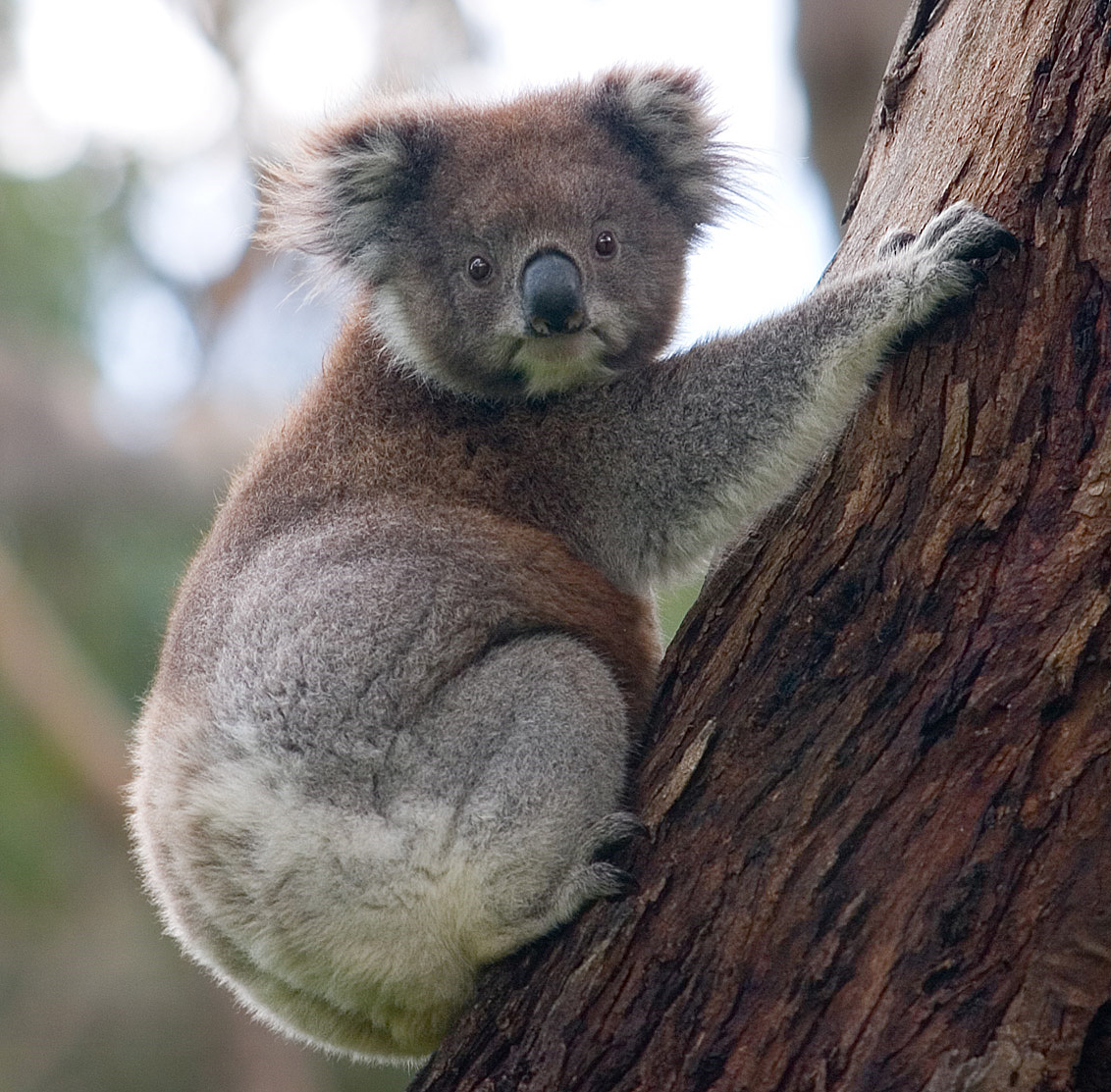
climate change and koalas

It seems that polar bears aren't the only significant species being affected by climate change. Koalas are also in danger. See The Australian
Koalas at risk as trees lose nutrients
Greg Roberts | April 05, 2008

KOALAS and other leaf-eating animals face a bleak future, with new research showing eucalyptus leaves are becoming inedible because of climate change.

Australian National University science professor Bill Foley says: "What we're seeing, essentially, is that the staple diet of these animals is being turned to leather. This is potentially a very significant development for the future of some marsupial populations. Life is set to become extremely difficult for these animals."

James Cook University researcher Ivan Lawler found through experiments in greenhouses that increased levels of carbon dioxide reduced the levels of nitrogen and other nutrients in eucalyptus leaves and boosted tannins, a naturally occurring chemical toxin.

As a result, the levels of protein in the leaves, essential to the survival of leaf-eating marsupials, fell sharply.

Dr Lawler said eucalyptus leaves were already poor nutritionally, with low protein levels, requiring a koala to eat 700g a day to survive.

"With more carbon dioxide, animals need to eat more and more leaves to get their required protein levels," he said.

"The balance in the leaves shifts from nutrients to non-nutritional fibre. It eventually reaches a threshold when leaves are no longer tenable as a food source.

"The food chain for these animals is very finely balanced, and a small change can have serious consequences."

Koalas and greater gliders depend entirely on eucalyptus leaves for food, while some other marsupials, including brushtail and ringtail possums and many wallaby species, feed extensively on the leaves. And numerous insect species feed exclusively on eucalyptus leaves.

Scientists have reported mysterious declines in populations of greater gliders and brushtail possums in parts of Queensland in areas where the bushland remains in pristine condition, and where there are no apparent pressures from hunting, disease or other factors. Greater gliders have disappeared from places where they were numerous 20 years ago.

Zoologist Jane De Gabriel said the falling nutrient levels in eucalyptus leaves could explain the population declines. Ms De Gabriel found from her research in woodlands west of Townsville that brushtail possums bred more frequently in areas of bushland with high levels of protein in the eucalyptus leaves. The breeding success rate was five times that of possums in areas with low protein levels.

"This suggests that in areas where nutrient levels are inadequate, animals will not be able to reproduce successfully," Ms De Gabriel said.

"What follows from that are extinctions of wildlife populations. It's pretty scary stuff."

Climate change has been linked to changes in the status and distribution of many wildlife species. Animals most at risk in this country are those living at high altitudes in Queensland's wet tropics and in the alps.


Oh dear.

**************
Today was a busy day - visiting Klaudia, Sally and Kettles in the morning with Kane (we hadn't caught up since before Christmas), going to a retirement party in the afternoon and then some tree pruning.

29 March 2008

Earth Hour

It was great to participate in Earth Hour this year, after the success of the first one in Sydney last year.

I turned out all the lights at 8pm for an hour, but it went over time as I nearly forgot to switch them back on. It's a purely symbolic act of course, as I only use low energy globes.

Sydney Opera House


Sydney harbour


Sydney skyline


Canberra - lights off at Parliament House


Some people think the exercise is pointless and doesn't save much greenhouse gas emission or energy. The point is symbolic and to let people know that they can all play a part and if everybody plays their part, it can make a difference.

***************
Today was Kane's Day (see his blog).

CQ came over in the afternoon for a beer to make up for double booking for dinner. I had planned to make Shepherd's Pie. The best laid plans always go awry.

Aside from the outings with Kane and the visit from CQ, today has been a quiet day, catching up on Torchwood and the latest Smallville.

28 March 2008

tomorrow is Earth Hour... so change the windows

Earth Hour started in 2007 as a Sydney event. This year, it has gone global.

Tomorrow night (29 March 2008), many cities around the world will switch off their lights at 8pm for one hour. At work today, staff were reminded to turn off their computers and unplug them from the wall, including any non-essential appliance before they went home.

There was a timely article in the Sydney Morning Herald today about an invention that could revolutionise windows and lighting
Window by day, light at night

Jennie Curtin
March 28, 2008

AS THE world prepares to switch off for Earth Hour tomorrow, the work of a young Sydney designer may make the light switch redundant forever.

Damien Savio, 23, has developed a window which stores energy from the sun during the day and then becomes a light at night. Just four hours of direct sunlight can produce a 60 watt-strength light which will last six hours.

His invention, which he calls the Lightway, has the potential to cut household energy use by 22 per cent.

Mr Savio was inspired by his discovery of organic light-emitting diodes, a new technology which has been used to improve the quality of pictures on mobile phone screens and laptops. He combined OLEDs with transparent photovoltaic cells, another developing field.

"Technically, it's only really, really new," he said. "The whole time I was doing it I had people tell me, no, that's not going to be possible. They were always doubting it and trying to test me on how it would work."

Mr Savio has spoken to a lawyer about patenting his work so was reluctant to gives details on how the Lightway is made, but he did reveal it involves an injection mould used during production of the window.

As the window absorbs solar energy during the day, it is stored in a battery hidden in the window frame. This means it can be used as a light at any future time.

Mr Savio, from Longueville, created the Lightway for his industrial design degree. It has been nominated as a finalist in the Australian Design Awards-Dyson Student Award, which will be announced in May.

He used louvre windows to develop his concept "because they looked good" and also because the panels are removable, so they can be carried around like a torch.

"I also wanted to have the wow factor," he said. "Whenever I do a design I just want to do something different and something that stands out. I like that with this, you don't even know it's a light until it's on."

Mr Savio said the Earth Hour message of the need to reduce greenhouse gas emissions was "one of the main driving forces" behind his creation. LEDs are a particularly energy-efficient form of lighting.

But the designer will not be home to switch off the lights on Saturday. He will be at work in a city bar where he reckons it is already so dark the patrons will not notice the difference.
Here is the entry for his nomination for the Australian Design Award

Student Designer
Mr Damian Savio

University
University of Western Sydney

Product Description and Principal Function(s)

Lightway is a window and lighting system based around the existing Breezway window louvre system.

The major difference being the Lightway uses organic OLED's and advanced transparent Photovoltaic Nanoscale technology to allow sunlight to enter the household during the day and to fill the house with light during the night.

Lightway is essentially a modular light that absorbs solar energy during the day, using it a night to illuminate an area as if it were daytime again.

The entire system is transparent and extremely efficient. There is also a portable application to the system.

Why does the product represent design excellence and why do you believe it deserves an Australian Design Award?

The project represents excellence largely because it is a concept that is unlike any other that exists today. The idea behind the design is highly innovative taking 2 very new technologies and using them in a simple but effective lighting system that could be the next major revolution in the way we think about lighting. It is a system that has been designed for homes, museums, galleries and shopping centers.

Along with being innovative, the light is also aesthetically pleasing. It is a modern design that incorporates sleek transparent window panels with and anodized aluminum frame. Each panel can be customized with colours, art and graphics that are illuminated to enhance the light for a particular application.

In terms of functionality, Lightway is a cut above the rest. Not only is there no need for it to be connected to any power grid, it is also highly efficient and versatile, capable of producing the same amount of light as a 60watt incandescent globe from just 5 watts. With in the system there is also a mobile unit that can be used to take light anywhere, and that will also charge on its own. Light from the unit can be adjusted to suit the mood that is required, by adjusting the direction of the louvers. Each panel is also extremely tough being constructed from strong polycarbonate. Charge time for the system is 4 hours of direct sunlight with 2 hours daylight. This will give the system a running time of around 6 hours. The batteries used will last for years, capable of handling thousands of on/off cycles. Almost every aspect of the original Breezway system has been redesigned and RESOLVED for Lightway, while remaining Breezway certified.

In terms of practicality and ease of use, the system is excellent. Since it has been based around an existing Breezway system, the design incorporates everything they have learned over the 10 plus years they have been in operation. The system incorporates safety features such as lock, security bars and fly screens. The system can be made to fit any sized window or door way. Operating the system is easy, only requiring a simple rotation of the single louver handle to open and close the system. The system also meets Australian Standards in terms both of construction and voltage, remaining below the high risk 32v category.

There is definatley a need for the product, as it has the potential to reduce household and city wide electricity usage by a massive 22%. Which is good news for the environment and the economy. A number of people have expressed interest in the concept for the stated applications and it is a proven concept that will work, as stated by a number of physicists that i have presented it to.

Lightway would be sold and Breezway outlets in a display style showcase, where consumers would come and view the entire package and order the system as required. The product would then be delivered with in 5 working days and fitted.
I am hoping that the technology could be applied to full sized windows.


***********************
We had a happy hour at work today and the theme was for staff to wear their football colours. I went for half and hour and must have been the most tragic!

Nick B was supposed to come over tonight to watch the football on tv (live broadcast) tonight, but had double booked. So it's just me and Kane. I don't know if he is concerned by my yelling.

21 January 2008

It's only rain... water

I wrote about bottled water on 17 April 2007 and how buying bottled water is very environmentally unsound and followed up with another post on 16 September 2007.

I've just discovered that 'Tasmanian rain' is being bottled, packaged and being sold by a company called Tasmanian Rain.

That's right, 12 bottles of 750 ml each for US$59. May as well pay a bit more and buy wine instead!


Hmmm... Most drinking water in Australia (of which Tasmania is just one state) is rain water, collected in catchment dams and then treated. The northwest of Tasmania where 'Tasmanian rain' is supposed to originate, is supplied their water by Cradle Coast Water.

Nevertheless, Tasmanians who are not connected to the reticulated water supply or who prefer rainwater can source their drinking water from 'Tasmanian rain'.

I like this advice from the Tasmanian Department of Health and Human Services
Rainwater Tanks

Rainwater from your roof can be a valuable resource particularly in areas where reticulated water is not available. To help ensure good quality water, it is important to correctly install and maintain the rainwater tank and catchment area.

What can go wrong?

Water collected from roofs may be tainted by substances washed off by the rain and may even be unhealthy to drink. These may be chemicals such as components of paint or wood fire deposits or they may be micro-organisms from bird and animal droppings. Contamination can also be caused by decaying leaves and dead animals which have fallen into the tank. In addition, tanks can act as breeding sites for mosquitoes which in some circumstances may be carriers of viral diseases.

Measures to Safeguard Tank Water Quality:
  • Install screens on all tank inlets. Install first flush bypass devices which collect roof debris. These are available from tank suppliers.
  • Roof gutters and screens should be regularly checked and kept clean.
  • Cut back overhanging vegetation to prevent falling leaves, bird droppings and possum faeces from collecting on roof and in gutters. Bird and animal repelling devices could be considered.
  • Keep wood heaters in good repair. Remove 'Chinese hat' type chimney flue cowls.
  • Keep roof in good repair and check with suppliers of materials before using them on a roof used for collecting drinking water.
  • To be assured of microbiologically safe drinking water, disinfect the tank with the appropriate amount of chlorine. If gross contamination occurs, such as finding a dead animal in the tank, empty and refill. In addition, in these cases the tank may need a higher dose of chlorine - seek advice. Until the tank is treated boil all water for drinking and food preparation.
Aside from the environmental cost of manufacturing glass bottles, transport etc, water is a scarce resource in Australia. Water from Australia should not be bottled to be sent offshore. Most of the Australian population are on water restrictions and many gardens have died. It's despicable that a private company is allowed to remove some of our water for huge profits. End of rant.